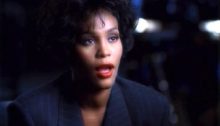

The Wonder Years S01E06 Dance With Me

“Things wouldn’t be the same between us. We were getting older. And whether we wanted it or not, the Lisa Berlinis and the Kirk McCrays were changing us by the minute. All we could do was close our eyes and wish that the slow song would never end.”

- Kevin

The pilot of The Wonder Years ended with Winnie and Kevin in each other’s arms, sharing a completely intuitive moment of intimacy. The world was pushing them together through a shared moment of deep loss.

Dance With Me, the excellent conclusion to the show’s superior first season, also ends with Winnie and Kevin sharing a moment, but this time the world is pushing them apart. Their shared loss here isn’t a death of a loved one, but of innocence.

This finale had a lot of plot to cover in 23 minutes, more than any episode since the pilot. Kevin is friend-zoned by Lisa, misses his chance with Winnie, sees even Paul embracing the complex social world by the episode’s end, and has only one dance with Winnie to show for it. When you compare this to the previous two episodes — which covered a family dinner and a single phone call — Dance With Me feels a bit busy.

In particular, the first act felt a bit rushed as Lisa gets ejected from Kevin’s life within the first few minutes. (I will say, though, the way the show paused to drag out Lisa’s enunciation of “friend” was downright brilliant.) But it allowed the show to hurry and get back to the romantic interest that we know Kevin really cares about, Winnie.

But by the time the episode got to its halfway point, it fell into a rhythm. The last ten minutes or so were a string of great scenes one after another, some hysterical and some heartwarming. Every character gets a moment to shine, whether it’s the Arnolds’ dance lessons or Paul’s gradual acceptance of dancing with Carla.

And when it started digging deeper into the Kevin-Winnie relationship, the episode cut to some of the themes that have defined this season: Fleeting moments of shared understanding, the inevitability of loss, the terrifying passage of time, and how outmatched you can feel against the world as you’re gowing up.

On a side note, how great of a character is Paul? He’s absolutely hilarious, and actor Josh Saviano makes the most of his every moment: his funny lines about how he can’t see, his allergic reactions to Carla, and eventually his dance with her.

It’s overdue, but I also want to praise Alley Mills, who consistently shines as Kevin’s mom, Norma. I especially enjoyed her scene in the kitchen where she convinces Kevin to go to the dance. I enjoy her more as a smart, perceptive character than a whiny, overbearing one.

Dance With Me was an excellent way to wrap up this first season, full of great plot and character growth, funny writing, and an undercurrent of profound melancholy.

A couple other thoughts:

  • The soundtrack for this show continues to shine, and the dance (along with the lessons beforehand) gives us plenty of great tracks ranging from Otis Redding to Steppenwolf.
  • Dance With Me has some impeccable direction and editing: Aside from the aforementioned pause when Lisa friend-zones Kevin, I loved the cut from Norma saying Kevin can help her with dinner to him trying on dance outfits, the moment when we think Kevin is asking Winnie to dance but is really trying to make her jealous by asking someone else, and a few others.

The Wonder Years S01E05 – The Phone Call

Five episodes in, and The Wonder Years is batting a thousand. The Phone Call is not the best episode of the series yet — that’s either Swingers or Angel — but it again takes a small issue, packs it with significance and stakes, and brings it home with a poignant ending. If this is The Wonder Years formula, I’d be pleased.

Can we talk for a second about how well directed and edited this episode (and series in general) is? The writing is what I keep praising in these repsonses, but this show is also very strong technically and visually. This was the best-directed episode yet, full of well-framed shots and funny cuts from one scene to the next. My favorite technique this episode was the diagetic audio fading into background music whenever Kevin was overcome with a particular emotion.

I had been worried after the first episode that the show would be too melodramatic and too focused on cliffhangers. Perhaps the show will ultimately end up there (it’s hard to be great for six seasons), but for now I love its concentration on tiny battles that can seem massive in the moment for an adolescent.

Kevin’s love life has proven to be a potent vein for comedy, in part because romance has an inherent tension and in part because The Wonder Years has such solid writing for its fringe characters as well as its protagonists. I continue to love every second Paul is on screen, and Wayne’s delivery of “Hello, Buttface” was perfect.

But the biggest key to the show’s success has been tying each smaller battle into some larger war. The idea that adolescent drama, even something as small as a friendly phone call, can seem mammoth-sized is taken seriously, and a timely reference to Apollo 8 orbiting the moon gives Kevin a symbol to help him gain some perspective.

Another enjoyable episode in what is shaping to a be a fantastic first season of The Wonder Years. The first season finale is up next.

A few more thoughts on The Phone Call:

  • Most episodes of The Wonder Years have been unpredictable, but here it wasn’t. Did any seasoned TV viewer really think Kevin would successfully make the call by 8:00?
  • The brief fantasy sequence of Lisa taking Kevin’s phone call worked so well because it seemed real at first. By the time reporters were calling in, though, I was cracking up.
  • What does Winnie think about Kevin’s infatuation with Lisa? We know that Kevin and Winnie have decided to take it slow after their special moment in the pilot, but does that mean both are okay with the other pursuing romance elsewhere?

The Wonder Years S01E04 – Angel

Angel starts slowly, and, during the first two thirds of the episode, I found myself bothered by the voiceover for the first time. But by the time the credits rolled, Angel had evolved into a truly great episode of television, perhaps the best of the series yet.

The episode reminds us that, while The Wonder Years is largely about the coming of age of a small group of people, it’s also about the loss of innocence of an entire American generation. Karen’s boyfriend Louis forces the Arnold family to confront some difficult, liberal notions: That women can have fulfilling careers as well as men, that war is more pointless than it is heroic, that the government and media can manipulate their opinions.

And yet, Louis takes his liberalism too far. Aside from being a rude houseguest, he uses his open sexuality (or perhaps simply his college-guy horniness) to betray the intimacy that Karen thought he and she exclusively shared. The final moments are the most humanizing moments of the series yet for Karen, and the moments I’ve been waiting for: where the show treats her as a layered character the same way it does the rest of the main cast.

For awhile I was worried that Angel would end up a farcical affair, where Marissa was a sister or a close friend. But the show elevates beyond sitcom fare and reminds us that no worldview is perfect, no person perfect.

It’s just a shame that half the episode wraps Kevin up in a silly, seemingly irrational sibling protective complex. Paul is again excellent on the episode fringes, as is the increasingly-amusing Wayne, though I’m worried he’s turning into simple comic relief.

But those last eight minutes are so strong that I’m happy to forgive Angel its sins and thank it for helping us navigate the morally complicated world The Wonder Years presents and for giving Karen some humanity by episode’s end.

The Wonder Years S01E03 – My Father’s Office

Taking a diversion from the Kevin-Winnie romance, “My Father’s Office” instead explores a character who had been marginalized during the first two episodes: Kevin’s dad, Jack.

All we had known from the first two episodes of The Wonder Years is that Jack is hard man. He’s impatient and assertive and comes home tired after every long day of work. I love Future Kevin’s analysis of Jack’s unwinding rituals, sitting in front of the TV and looking up at the stars, the latter of which is given more significance by the end of the episode.

We learn that Jack just fell into the job he has, that it’s unrewarding and tiring, and that there’s always someone hounding him. Kevin fancies his father as powerful and authoritative where Jack sees himself as mundane and pressured. Jack’s wife, Norma, seems to know barely more about Jack’s job than Kevin, so we know Jack isn’t getting much home support other than his peace and quiet in front of the TV or the telescope.

I really dug Kevin’s brief fantasy of power as Jack — forcing fictional workers (including a Wayne caricature) to take care of mundane tasks. But he learns by the end of the episode that real responsibility can mean taking accountability for unpleasant tasks, and taking blame when something goes wrong.

This bleak realization, that the work world is just as cold and unforgiving as Jack’s evening temperament, is countered by the nugget  of Jack’s romanticism left in him. After the worst days of work, he looks up to the stars — a beautiful image that ties nicely to his lost dream of being a captain. It echoes Kevin’s romantic ideals, and it shows us that Kevin might be destined to look at them through glass (as his father does) if he doesn’t reach for the stars.

Another excellent episode, and one that I hope signals the series taking closer looks at some of the supporting characters who have only had small moments here or there otherwise. Can’t wait for the Paul episode.

The Wonder Years S01E02 – Swingers

Wow, that was fantastic. Even better than the pilot.

In just two episodes, The Wonder Years has already started crafting a portrait of the complex, often paradoxical nature of growing up. The closing monologue hit the nail on the head where so many other coming of age tales stumble; growing up is not a linear process. There are “advances and retreats” and self-deceptions and nuances.

The opening scenes capture perfectly the strange, underrated dilemma of feeling the wrong emotion at the wrong time. In this case, it’s Kevin’s infatuation with Winnie clashing with the grief he knows he’s supposed to feel — and sort of does — about Brian’s death.

His brain tells him he should be sad right now, but his body tells him otherwise. And “Swingers” spends a bit of time contemplating the chasm between brain and body — particularly when it comes to sex. Everyone but Kevin and Paul can see that Wayne is bluffing when he says he already knows (or can “intuit”) everything he needs to about sex, but the talk — along with a perplexingly boring sex ed lesson — are enough to push Kevin and Paul to try and uncover what’s so mysterious and tantalizing about sex.

The plot ends with a punchline as Kevin’s mom scolds him, but the confusing combination of urges and pressures driving Kevin and Paul are genuine and well-earned. On an emotional level,  ”Swingers” is a very, very good follow-up that enriches an excellent pilot.

One thing I failed to mention in my recap of the pilot was how perfect the soundtrack is so far. One highlight is when Swingers starts with “For What It’s Worth” and a shot of a military graveyard, anonymous and terrifyingly orderly in its acknowledgment of mass death.

And one minor complaint I noticed in the pilot but failed to mention is also present in “Swingers:” The sporadic, silly use of special sound effects. The pilot used the sound of a fighter plane to literalize the aggression of the PE teacher, and here, we get a simulated skidding sound as Kevin and Paul rush in to the book store.

Speaking of Paul, he had another series of great small moments here, exercising boldness twice (once stealing the book, once trying to take it out of Kevin’s room after they’re caught). Wayne, for the amount he hassles our likable protaganist, is well-acted enough to be enjoyable.

Winnie, who was short-changed a bit in the pilot, is still kept pretty closed (and I’m starting to figure out that’s part of the point), but there’s some implied complexity that I hope the series explores as the series progresses.

The Wonder Years S01E01 – Pilot

I just watched the pilot for The Wonder Years on Netflix, and I thought it was fantastic, so I felt inspired to write a response to it here. This may be the only episode I write about, or I may do the entire series. You’ve been warned.

What I loved most about this pilot was the sense of melancholy and loss that permeates the entire episode. From the opening shot of grainy footage of the family innocently playing in their front yard, to the closing monologue about a long gone first kiss, The Wonder Years is about a loss of innocence from the beginning.

Of course the big plot twist is a literal loss: the death of Brian, the epitome of cool grown-uppedness. Kevin’s idealized version of middle school — where he wears purple pants and sits at the cool table — passes along with Brian. This plot development verifies what the opening suggests: loss of innocence will be the theme at the heart of this show.

If I have a complaint with the episode, it’s that it didn’t spend enough time establishing either Brian or Winnie, which prevented those closing minutes from having a real impact. I like the metaphor of Brian’s death, but as a character moment it felt unearned.

Winnie is a central character from the opening scenes but wasn’t given much to really define her. It’s implied by her make-over that she, like Kevin, hopes to use a new school as a chance for a new identity. But the writing never moves her beyond a piece of eye-candy for Kevin who seems normal and decent enough, and who shares a special moment with him.

Another character whose introduction felt lacking was Karen, Kevin’s older sister. I wasn’t around during the ’60s, so I don’t know how people really acted, but her character here seemed stereotypical and narrow. I’m hopeful she’ll receive adequate development as the series evolves.

But I can’t hold any of these character quibbles against the pilot when it had so much else going on, and so much of worked phenomenally. I love that the voice-over lends significance and tension to what might otherwise seem trivial. Grown-up Kevin does just the right amount of philosophizing even as he’s busy introducing us to the many characters.

I also admire that the pilot never paints strokes too broad. The details are specific, and funny, and moving. (Contrast that to the amusing, but overly broad That ’70s Show pilot.) We can see that from the opening lines alone: “1968. I was 12 years old. A lot happened that year. Denny McLain won 31 games, The Mod Squad hit the air, and I graduated from Hillcrest Elementary.”

It’s the details that really stand out — Paul is allergic to meat loaf and salad (he’s allergic to everything), the perfectly pathetic wrestling between Wayne and Kevin, Kevin’s narration of the tension when his dad gets home from work, the fact that Kevin had been planning his wardrobe for 6 weeks. This is pretty fantastic, entertaining writing all around.

It’s also worth noting that the pilot touches on plenty of taboo topics — Marijuana in schools, parents beating kids, birth control, and PE teachers weirdly obsessed with talking about kids’ bodies. Yet it treads these topics never in an exploitative way, but as just another fact of growing up in 1968.

As I revisit clips of the pilot, what stands out more than anything is what I mentioned first here: The tone, which blends melancholy, amusing, and — most of all — achingly nostalgic. These themes are captured wonderfully in the opening sequence that I hope they re-use in future episodes of home video footage of the characters with “A Little Help From My Friends” by Joe Cocker in the background. Perfect.

If most episodes can be at least half as thoughtful and poignant as this premier, this series will be a pleasure to watch.

Billy Joel – Turnstiles (1976): Moving on is a chance you take

“I know what I’m needing
And I don’t want to waste more time
I’m in a New York state of mind”
-Billy Joel, New York State of Mind

Rating: ★★★★★ (out of 5)

There’s a beautiful scene near the end of the 2009 movie Adventureland in which Jesse Eisenberg takes a bus-ride to New York City, peering out of the window. He soaks in the bright lights and city sprawl, and it rejuvenates him after a summer spent cooped up in the dingy theme park he work at.

Turnstiles is a lot like that bus ride: It witnesses Joel’s departure from his brown, sparse west coast life to the dense, colorful comfort of his home state. In turn, he channels equally a Broadway flair and a towering, Born to Run sonic sprawl that leave in the dust his musty James Taylor/Elton John impression of his first three albums.

Four of the eight tracks reference either New York or his departure from California in their titles. He reminisces about his time away (I’ve Loved These Days) and notes that life is still not perfect (Summer, Highland Falls) but makes it clear that New York is where he wants and needs to be (New York State of Mind).

The second reason Turnstiles is a turning point for Joel’s recording career is that he, for the first time, used his touring band in the studio. It makes a world of difference; these tracks are energetic and moving over large stretches in a way that previous albums could achieve for fleeting moments or single tracks.

I’ll go over this a bit more when I discuss his live albums, but Joel has never received enough credit for being an excellent band leader and talent organizer. Joel’s live act never matched the notoriety of legends like Springsteen, but the talent of Joel’s act nearly matches the likes of the E-Street Band. Listen to Songs in the Attic and tell me otherwise. The group’s skill and synergy manifests itself brilliantly on Turnstiles.

There’s not a weak track among the eight here. From the opening Phil Spector impression to the closing piano fade-out, Turnstiles is varied and compelling. Beyond the more diverse inspirations that came from Joel’s change of scenery, this album benefits from Joel reaching a melodic and emotional peak in his writing craft.

A few prominent themes recur across these songs. One is the idea that life is spent in alternating extremes. “It’s either sadness or euphoria,” notes Summer, Highland Falls, one Joel’s greatest ballads. Say Goodbye to Hollywood observes that “life is a series of ‘hellos’ and ‘goodbyes’ / I’m afraid it’s time for goodbye again.”

As with Joel’s previous albums, maturity is another big topic here. But for the first time, we sense Joel may have done a bit of it himself. All You Wanna Do is Dance — another nearly forgotten gem — gently critiques someone who’s having too much damn innocent fun to grow up. There’s a tone of jealousy in the words.

Joel also straddles the line of maturity in Prelude/Angry Young Man. It works both as a self-skewering and a self-defense. There is certainly a bit of self-analysis when he describes the Angry Young Man in the third person, but he also takes the first person as he notes that “I believe I’ve passed the age / Of consciousness and righteous rage,” showing that he’s attempting to move beyond his angriest days (Piano Man/Cold Spring Harbor).

Another track that considers maturity is James, which sports the most forgettable melody here (though that is not saying much at all). The song a letter to a former friend who gave up his musical career to face the real world. Joel remains skeptical that James made the correct decision: “Do what’s good for you or you’re not good for anybody.” This struggle between practical reality and youthful dreams would come to a head an album later.

The only song which doesn’t really contribute much to the album’s emotional complexity is the closing track, Miami 2017 (Seen the Lights Go Out on Broadway), a bizarre apocalyptic tale of a concert that goes up flames. It’s silly but raucous enough in the right live setting to be an excellent listen..

Turnstiles was Joel’s most lyrically ambitious and successful album thus far in his career. Yet it’s the music, which matches the words point for point in improvement, that really steals the show.

One obvious highlight is Joel’s individual performance work. From the mind-melting 128th notes that start Prelude/Angry Young Man (he’s playing them and the accompanying piano notes by himself) to the sweeping beauty of New York State of Mind, Joel’s piano-work would never be better than it is here. His vocal work is excellent, too, covering a variety of tones with accuracy and strength.

But the arrangements and performances are, in general, very strong. The biggest improvement from past albums is the drumming, which Liberty DeVitto, a new addition who would remain a Joel stalwart, uses to bring the tracks to life nearly as much as Joel’s piano does.

To pick a most impressive musical accomplishment, or even a short-list, on this album is challenging. New York State of Mind is one of the most enduring, virtuosic tributes to the Empire State ever recorded. But you can also make a strong case for Summer, Highland Falls as a perfect Joel ballad, Say Goodbye to Hollywood as a spine-tingling Spector (or, rather, Be My Baby) tribute, and Prelude/Angry Young Man as Joel’s manifesto.

With the exception of New York State of Mind, Turnstiles rarely sees the love or radio play of Joel’s upcoming stretch of albums, but it marks the beginning of his creative peak and ranks among Joel’s finest works.

Billy Joel – Streetlife Serenade (1974): Everybody does their share of losing

Rating: ★★★ (out of five)

Piano Man is such a satisfying album in part because it’s so obviously a full-hearted, emotionally-draining effort. That makes it less surprising — though no less disappointing — that Streetlife Serenade sounds exhausted and depleted.

Streetlife Serenade crystallizes the faint western hints on Piano Man and ends up with a loose concept album about life on the west coast. But where Elton John’s western album told tales of cowboys and guns and saloons, Joel chronicles the modern frontier: 9-to-5 work life and Los Angeles indulgence and suburban routine. It’s as unromantic as it sounds.

Joel headlines the album with two ill-conceived attempts at profound social observation. The title track (rather, the almost-title track Streetlife Serenader) outlines the theme of everyday encounters that the rest of the album would largely follow. It strives too hard to be profound and fails to redeem itself with a memorable tune.

The second of these is Los Angelenos at least provides a strong melodic background. But it stumbles just as hard as Streetlife Serenader in its attempts at incisive observation. Perhaps a more precise, explicit chronicle of aimless indulgence could have worked along the lines of Captain Jack.

The next track, Great Suburban Showdown, captures a hazy warmth and succeeds slightly more than the opening tracks at chronicling a way of life. It also seems to be a thinly veiled dismissal of his roots on the east coast – “I’m gone with the wind and I won’t be seen again.” It’s a bit ironic then that his homecoming would provide a creative spark two years later.

In all, the opening three tracks feel like a misfire. They foreshadow Joel’s continual failure to be a poet laureate for his age, or really for anyone but himself and Long Island (both of which he’s served well).

Fortunately, the later tracks redeem the package from being a complete disaster. After a brief instrumental detour (more on instrumentals later), Joel unleashes five straight compelling tracks. The best of these is The Entertainer, a song that succeeds on a few levels.

First, it serves a nice complement to Everybody Loves You Now, with Joel now the one “at the center of the stage.” And how does he find it? Just as ungratifying and lonely as he projected. The Entertainer is a brilliant trashing of the music industry: himself, the labels, even the fans.

Particularly memorable is the verse where he reflects on Piano Man’s title track: “It was a beautiful song / But it ran too long / If you’re gonna have a hit / You gotta make it quick / So they cut it down to 3:05.” It recalls the frustrating release of the Piano Man single, summarized here.

The Entertainer is also the most sonically panoramic track Joel had yet recorded. It showcases Joel’s first prominent use of an electric keyboard and features a number of different instruments jamming in the background of each verse.

Its strong melody paired with compelling lyrics and sonic expansion make it the jewel of Streetlife Serenade and one of the better tracks of Joel’s early career.

Another strong track on the album is Roberta, the fifth track on the album. It covers a narrative that’s almost a cliche at this point — falling in love with a prostitute or a stripper — but does so with grace and one great line after another. It’s one of Joel’s few tracks where the lyrics are much more compelling than the song itself.

A few tracks later, Joel really nails the western vibe for the first time in a pair of songs, Last of the Big Time Spenders and Weekend Song. The former is a pretty generic love song and covers a well-trod Joel theme: I’m not rich or fancy, but I can give you my time, music, and love.

The latter, though, is a great example of why it’s worthwhile to go through each of Billy Joel’s albums, not just greatest hits discs. I don’t want to overstate Weekend Song’s greatness, but it’s a track that should have been a single. The song blends a honky-tonk melody and earnest lyrics to a strong effect.

To close out the excellent five-song stretch is the shortest track Joel ever recorded, Souvenir, which clocks in at 1:59. It has a spectacular finality to it: “Every year’s a souvenir that slowly fades away.” In many ways it captures Joel’s struggle for significance that’s defined much of his career. For years, he closed every concert with this song, and I can’t think of a more fitting finale.

Souvenir would have been a perfect album capper, but Joel goes ahead and ruins the close of the album with the inclusion of another instrumental. Here’s my issue with the instrumentals: They’re just taking up space that would have been better used by full songs.

The more defensible of the two instrumentals is Root Beer Rag which seems to echo the ragtime stereotypically played in old west saloons. It matches the western feel of the album. But The Mexican Connection, which closes the album, really makes it sound like Joel just ran out of time to write lyrics. It detracts from an impressive closing stretch on the album and leaves you with a bad taste in your mouth.

In all, it just feels like there’s less music and fewer ideas on this album than Piano Man — subtract the instrumentals, and you’re left with eight short tracks, one of which runs less than two minutes. And the overall quality of the songs is a grade below the songs on Piano Man in spite of a few gems.

Fortunately, the peak of his career was just on the horizon, and Streetlife Serenade ends up an inconsistent oddity, barely a blip on the radar, rather than a harbinger.

This post is part of The Month of Billy Joel series.

Billy Joel – Piano Man (1973): Sharing a drink they call ‘loneliness’

Rating: ★★★★½ (out of 5)

The first minute and a half of Billy Joel’s sophomore album is tremendously revealing, and also a little bit deceiving.

The most obvious development in that opening minute and a half is Joel’s tremendously colorful sound provided by a diverse instrumentation. Where Cold Spring Harbor relied almost entirely on piano and vocals, Piano Man has a vivid soundscape that includes numerous string and wind instruments along with a wider variety of percussion and a distinct bass line.

The next most obvious development in those ninety seconds is a looser, more creative structure; Travelin’ Prayer, the opening track, is a refrain-less beat poem. While Cold Spring Harbor had flirtations with unusual structure (the strange middle verse of Tomorrow Is Today, for example), the songs largely fit a uniform mold that is often absent on Piano Man.

We also learn quickly that Piano Man is a west coast album, not an east coast one. Joel moved to Los Angeles in 1972 after Cold Spring Harbor floundered commercially, and the western influences are obvious. Elton John’s The Tumbleweed Connection is clearly a key inspiration.

From the start of Piano Man, Billy Joel simply sounds more confident, polished, and professional. No longer do these performances feel like rough drafts. He hadn’t yet reached his peak, but every composition and rendition is adequate at worst, which couldn’t be said of Joel’s debut.

While these first impressions all accurately reflect the evolution in Joel’s career found on Piano Man, that first minute and a half also gives one inaccurate impression: That Piano Man is a sentimental and loving album. It definitely isn’t.

That’s not to say Piano Man is entirely cold. In fact, I divide the album thematically into half. Five of the ten tracks here — Travelin’ Prayer, Piano Man, You’re My Home, The Ballad of Billy the Kid, Worse Comes to Worst — showcase Joel’s warm, humane side.

The other half, though, showcases Joel at his darkest. He chronicles all sorts of emotional despair and broken relationships. A recurring theme is the inevitability of solitude and suffering.

The bleakest moment is the seven-minute Captain Jack, which depicts the two-headed beast of addiction and nihilism and how they can lead to a pretty crappy young adulthood. If this sounds grim, it’s because it is; Joel so casually tosses out revelations like “They just found your father [dead] in the swimming pool” and “You can’t understand why your world is so dead,” that the song can be a tough listen.

But in the correct live setting, the song is something of a masterpiece that plumbs and purges the darkest depths of Joel’s soul. It never has a redemptive moment, but its organ-backed chorus is so intensely cathartic that it is somewhat therapeutic.

There are a few other dark moments. For example, Somewhere Along the Line posits that everything nice and enjoyable will eventually go sour, and If I Only Had the Words laments that romance is kind of pointless anyways.

Also on the bleak end of the spectrum are Stop in Nevada and Ain’t No Crime, which cover breakups from two perspectives. Stop In Nevada lambasts a leaving lover even as it can’t really blame her for doing so (“And though she finds it hard to leave him / She knows it would be worse to stay”). Ain’t No Crime, meanwhile, takes pity on the bum who gets left behind even as it smacks him around.

Together, these five tracks paint a pretty dark picture of humans in general, and specifically men: They’re nothing but fleshy bags of impulses. It’s an emotional low-point for Joel, who must have been going through some heavy stuff at the time.

Fortunately, there’s a flip-side of the coin to all this pessimism and desolation. The other half of the album, which is more structurally ambitious and weighted towards the front of the album, takes a slightly more positive light on humanity.

Travelin’ Prayer, whose opening I’ve described, provides a good lens to some of the musical themes on the album. It’s very bluegrass-tinged both in the lyrics and the music, which makes it something oddity in Joel’s oeuvre.

The second notable romantic ballad in Joel’s career (after She’s Got a Way) is You’re My Home, which sports some troublesome wordplay (“instant-pleasure dome” is the notorious phrase here) but makes up for it with some really moving lines — “It always comes as a surprise when I feel my withered roots begin to grow.”

Joel self-mythologizes on The Ballad of Billy the Kid, painting himself (presumably — he claims the song is actually about another Billy, though I doubt that’s entirely true) both a hero and a villain. It seems heavily inspired by Copland’s Hoedown and has some distinct classical elements to it.

And so we come to the elephant that I’ve avoided thus far: Piano Man the album, ultimately, will always be remembered first and foremost for Piano Man the song. Certainly, Piano Man is one of Joel’s finest and most moving works.

It more than overcomes a few bits of clunky writing — “tonic and gin” will never sound quite right, and God only knows what a “real estate novelist” is — with a series of heartbreaking portraits of lives that are sinking as the narrator’s music soars.

It would be a mistake to overstate the prominence of the title track on Piano Man. Though it’s understandably Joel’s trademark song, it never overshadows the magnificent, vivid, aching album around it, one that’s just short of a masterpiece.

This post is part of The Month of Billy Joel series.

Billy Joel – Cold Spring Harbor (1971): Now you’re in the center of the stage

Rating: *** (out of five)

Billy Joel’s solo debut, which he released at the age of 22 after taking part in a few failed bands, is something of a mixed bag.

Compositionally, this is a 4-star album, showcasing a young songwriter coming into his own emotionally and poetically. Performance-wise, this is a 2-star album, with sonically flat recordings that feel oddly empty and cool. I decided the best way to reconcile this disparity is to give the album three stars.

For a solo debut album, it’s awfully concerned with endings; over half of the songs deal with ended or ending relationships. For example, Why Judy Why recollects a lost friendship that should have been something more.

In Falling of the Rain, Joel crafts a morbid allegory for his obsession with music inevitably dooming his chances at romance and human connection. The song succumbs to a forgettable melody and performance, but the sentiment in the lyrics would prove prophetic in later albums.

The greatest of the breakup-themed songs here is Everybody Loves You Now, the best track on the album and the lone performance with any spark of energy. Joel bitterly mocks a lover’s new found fame — “Just a little smile is all it takes / You can have your cake and eat it too” — as he predicts her downfall — “You know that nothing lasts forever / And it’s all been done before.”

Everybody Loves You Now is a success on multiple levels, from the Long Island specificity, to the cracks that show Joel’s lingering affection (“They all want your white body … But between you and me and the Staten Island Ferry / So do I”), to the fantastic piano backdrop, to the eerie prescience of the piece; he would enter “the center of the stage” himself within a couple years.

The closing two vocal tracks deal with conclusions in a broader sense: The final track, Got To Begin Again, bids adieu to a past era of his life, perhaps his early musical projects.

But the most fascinating and the darkest track on the album is Tomorrow is Today which chronicles the depression that pushed Joel to attempt suicide the previous year. “I’ve seen a lot of life and I’m damn sick of living it,” he observes as he describes the dreamlike emptiness that renders every day equally meaningless — “I don’t have to see tomorrow / ‘cause I saw it yesterday.”

The song delivers a bellowed, gospel-ish verse towards its middle that pushes Joel to an emotional edge. Those thirty seconds are the most compelling performance moment on the album aside from Everybody Loves You Now.

The best-remembered track off of Cold Spring Harbor is She’s Got a Way, which would later become a standard. The love song is thematically simpler than anything around it. While Joel would later illuminate this simplicity with an astonishing warmth in its famous live version, here the track feels sterile and slight.

She’s Got a Way and Everybody Loves You Now are the most enduring of these ten tracks because they lived on as some of Joel’s concert favorites. It’s a shame we never hear live renditions of Tomorrow Is Today or the catchy, McCartney-esque You Can Make Me Free — I want to hear richer, fuller renditions of these tracks.

As it stands, the bare and inconsistent takes on this album mar an otherwise compelling, if slightly inconsistent, work. Within a few years, Joel would improve his performances and raise his live gig to something that far surpassed all but his best studio versions.

This post is part of The Month of Billy Joel series.