

Pixar Retrospective – Ten films into redefining animation

Pixar_animation_studios_logo

pixar-screens

[out of four stars]

Toy Story (1995) – 4 stars
A Bug’s Life (1998) – 3.5 stars
Toy Story 2 (1999) – 4 stars
Monsters, Inc. (2001) – 4 stars
Finding Nemo (2003) – 4 stars
The Incredibles (2004) – 4 stars
Cars (2006) – 2.5 stars
Ratatouille (2007) – 4 stars
WALL•E
(2008)4 stars
Up (2009) – 4 stars

Many, many thoughts on the first decade and a half of my favorite film studio of all time, after the jump.

[Read more...]

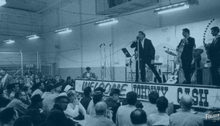
Community is “streets ahead” of the rest

TrueTV.NBC.Community

There are lots of reasons I love NBC’s sitcom Community. After last night, there’s one more. One of the subplots of the episode was Chevy Chase’s out-of-touch character Pierce trying to coin the term “streets ahead” as a synonym for “much cooler than.”  On its own, it was a pretty funny and bizarre thread. But the origin story makes it legendary.

First, the backstory: Hulu.com had a fan-voted “best of TV” bracket along the lines of March Madness that had fans vote for which TV shows they like more. Community pulled out some big early upsets, toppling the more popular Glee and Modern Family. The former win was especially unexpected considering the show has received some media attention for its “Gleek” hardcore fans, the type who might troll online polls.

Anyways, not long after these first and second round wins, Community creator and writer Dan Harmon made this tweet from his account, @danharmon:

He then spent the rest of the day — and week and month — mocking “amyfairycakes” (and the Botti video) for using the term “streets ahead”.

  • “Streets ahead! [trumpet] Get your lingo out of the bed! [tambourine] You don’t have to say miles, you can use the word streets instead!”
  • “Streets ahead! [twang] Light years and leagues are dead! [trumpet] use a word that makes your measurements sweeter than cinnamon bread!”
  • “They call me Streets, last name Ahead, and I’m the longest distance you ever said!” #StreetsAhead

The joke was elevated into absurdity (worthy of the creator of a show as absurd as Community) with this:

And he just w0uldn’t let it go:

  • Office and P&R are TIED in that Hulu thing 50/50 right now. Hate to see them fight so I’m glad neither is losing. #WeAreStreetsAheadOfMF
  • Also, I’m working 24/7 to get the phrase “Streets Ahead” into common parlance. The PSA if you missed it: http://bit.ly/bIJzVe

Fan Tim Stoltz suggested that Harmon bring “streets ahead” into the world of Community, but it seems Harmon was one step ahead of him.

  • @tim_stoltz : @danharmon Your hatred of “Glee” has made its way into “Community;” how long till your new favorite phrase makes it?
  • @danharmon : @tim_stotz I’m putting it in the current script, so it’ll be a few weeks. But I have to get the world understanding it by then!

He occasionally used the term out the next few weeks on his Twitter, but the real payoff came last night when the (quite excellent) episode finally aired. Phenomenal work, Harmon.

Moral of the story: If you want your stupid slang to be immortalized, make fun of a slightly vengeful, hilarious TV writer.

EDIT: Claimed by amyfairycakes and a commenter, and verified by a friend who lives over there, “streets ahead” is a British/Irish term that’s relatively common over there. Fair enough. Harmon was evidently aware of this but continued unfazed with the mocking anyways.

  • @amyfairycakes – @danharmon streets ahead is already in common parlance in ireland & UK, it’s not a wacky phrase I just conjured up.
  • @danharmon – @amyfairycakes You’re telling me the only two words you put together that moved me aren’t yours? But aren’t you a writer? You said “meta.”

How to Train Your Dragon (2010) – Flying away with my heart

Rating: 3 and a half stars (out of 4)

There are times — especially when I watch a movie with the intent of studying its “greatness” or writing a review — when I forget why I love movies so much. Reading movies closely can be a chore. An enjoyable chore that I have a passion for, but a chore nonetheless.

And then there are times when I walk out of a theater with a grin across my face as wide as the silver screen. A movie can be far from perfect, yet be so overflowing with the unquantifiable — things like adventure and joy and energy — that I remember why it is I love this medium in the first place. How To Train Your Dragon, my favorite non-Pixar animated film since at least 2001′s Shrek, is one such movie. It has enough flaws and formulaic elements for me to (begrudgingly) knock off a half star. But know that this movie has my unconditional recommendation, not because it’s perfect, but because it’s something better than perfect: It’s magical.

Dragon is at its strongest when it’s not rushing the plot ahead and when it’s focusing on the bond between main character Hiccup and his dragon, Toothless. These scenes unfolds like the greatest human-pet stories: Hiccup and Toothless come to understand each other more and more, until they — and the audience — realize the relationship is less between beast and master, and more between two equals. There’s also a great comic timing to Toothless — who channels a dog, a cat, a bird, and a chipmunk all at once — that seems inspired in part by the vibrant visual comedy of WALL-E.

Visually, the most inspired moments — and the ones that really mandate this movie be seen on the biggest screen possible in 3D — are the flying sequences. They give a true sensation of flying through the air, almost like you’re on a roller coaster. There’s a stunning depth and and smoothness that really transmits a wide-open world. The clouds, mountains, oceans, vistas, beaches: they’re all lifelike and beautiful. I’m getting chills right now just thinking of the romantic flight that separates the second and third act of the film.

There’s also a surprisingly good script at the heart of Dragon. It makes extensive (and effective) use of recurring conversation structures throughout the film. “That’s for everything else” — a “Here’s looking at you, kid”-type line — works in particularly cute and funny ways.

Jay Baruchel’s Hiccup would’ve come across as annoying or unlikeable with any other voice actor. (Thank God they didn’t go for biggest-name-possible casting with the main characters the way DreamWorks has a tendency to.) With Baruchel, though, the voice matches the personality in the same way Ellen Page matched Juno; it just works and wouldn’t with anybody else.

The dramatization in the script is pretty well-realized, particularly between Hiccup and his father Stoick. It’s not anything too complex, but it’s effective. Stoick is stern but exudes strength and caring, courtesy voice actor Gerard Butler. I thought Baruchel and Astrid’s America Farrera also had pretty good chemistry, even though I think Farrera wasn’t the best pick for the romantic role; someone spunkier would’ve fit the character more.

The special sauce of the whole experience is the movie’s phenomenal score. I’ve had the soundtrack on loop for most of the week. It’s not quite into classic Williams or Zimmer territory, but its darn close. There are two or three recurring themes that are just sensational. To me, the score is a major part of the feeling of adventure and magic that this film has. If it had gone with snarky pop tunes a la the Shreks, I think the film wouldn’t have been so entrancing or felt so instantly classic.

The movie does have its flaws. First is the pacing of the film. The end of the second act and the beginning of the third act rush furiously. There’s two hours of story here packed into ninety minutes in order to fit into the “kids movie” mold when a Pixar-esque expansion for the sake of storytelling would’ve behooved the movie.

In particular, Astrid’s transformation is rushed. It’s a shame, because an added level of poignancy would’ve elevated this film up with the all-time great animated adventures: Lion King, Beauty and the Beast, Aladdin, Pinocchio, etc. I also think the tension in the father-son conflict should’ve been a little bit more balanced by making it even easier to empathize with Stoick and the community with elaboration on why the Vikings hate dragons.

Next, I’m not sure I like where the film settles thematically. It’s hard to tell since we only get a few seconds of seeing the town post-climax, but the solution seems to be that the dragons become pets whereas partners would’ve fit better. With this ending, it seems like the lesson is “that which you don’t understand, domesticate” when I think a deeper respect for the uncontrollable nature of the dragons would’ve worked. A lesson that emphasized our ability to symbiotically cooperate with nature would’ve been a little bit more effective. This simplistic, easily digestible solution works, but would’ve benefited another layer of quality and complexity (Pixar-style).

Furthermore, no consideration is given to whether destroying the queen-hive relationship might in fact put the dragons in a worse-off situation. It felt a little bit short-sighted in a movie whose overriding theme is about opening your horizons and tolerating “the other” for their home to be blindly destroyed and abandoned.

Two more minor complaints, then I’m done: Compared to the dynamic, crisp writing that pervades the rest of the film, the writing for the other teens — Jonah Hill and co. — is forgettable. Lastly, I think the character designs could’ve used a little bit more flair. Hiccup himself is extremely plain and even the most interesting designs, Stoick and Toothless, aren’t as iconic as other great computer-animated characters like Wall-E or Shrek.

I want to stress, though, that these complaints are peripheral to the entire experience.  This movie is about making the formula exciting, which Dragon does extraordinarily well. It has that rare type of magic where I actively want to forgive the movie for the times it’s simplistic and imperfect. Truly, How to Train Your Dragon soars with the  highest animated films of the past decade. It will take a darn good slate of movies for it not to receive a prominent placement in my end-of-year top ten.

Billy Joel – Cold Spring Harbor (1973): So I listen for an answer, but the feeling seems to stay

Rating: 2 stars (out of five)

Though it’s not a very good album, Billy Joel’s 1973 pre-major label album (*) is intensely prophetic. It signals, in some way or another, every one of Joel’s strengths and weaknesses. You’ll never revisit more than a few of these tracks, but it provides a meaningful look into the development of one of America’s great music-makers.

(*) I think Cold Spring Harbor — though it’s his first solo album — works best when considered a precursor to his solo career instead of an actual debut. Piano Man, his next album and first major-label project, serves functionally as a debut.

Surely the first thing you’ll notice about Cold Spring Harbor is the faulty speeding, which not only shortens the song but raises the pitch up a few steps. The whole album has a “chipmunk” effect and a very flat sound. The album suffers as a result; the sound lacks richness and warmth that would be apparent in later recordings of these compositions.

Next, the production on these tracks is much more sparse than any of his other albums. A few tracks have some guitar or strings thrown in, but the majority of these songs are little more than piano, vocals, and a little bit of percussion.

Despite these unique properties, Harbor will be pretty recognizable to anyone familiar with Joel. Here are a few traits the album highlights:

  • Effective piano work – This is a piano-heavy album, and Joel’s respect for the instrument’s power is evident. He crafts soundscapes (plinking in “Falling of the Rain”) and has a good knack for allowing the piano to take over at the right times.
  • Pervasive loneliness – One underrated aspect of Joel’s catalog is its darkness. His reputation is that he’s the Piano Man, or the guy who sang “We Didn’t Start the Fire,” or the sugary balladeer. But most of his songs are about his own unhappiness and his doomed attempts to find contentment. Harbor has many interpretations of loneliness, from the sentimental (“Turn Around”), to the defeated (“Got to Begin Again”), to the downright scornful (“Everybody Loves You Now”).
  • Brilliant, immediate hooksYou know those pop songs that are so immediately catchy that they get stuck in your head, but are strong enough to remain bearable years later? Half of Joel’s catalog are those songs. The only people who can really make a claim to writing pop melodies better than him are Paul McCartney, Elton John, and Brian Wilson. Harbor is one of Joel’s weakest albums, but it still has its gems (“You Can Make Me Free,” “She’s Got a Way,” “Everybody Love You Now”).
  • Perceptive lyrics – Most forget his name when listing the great American lyricists, but Joel successfully blends lyrics that are specific enough to communicate they have personal meaning and profundity, but abstract enough to have global effectiveness. “Everybody Love You Now” is a great example: Comparisons between abandonment and cold harbor air are realized with enough emotion to be heartfelt. Yet, the despair of being forgotten by someone who has moved on to bigger and better things is something universal.
  • Flexible vocals – Most rock writers and critics underrate Joel’s voice. He’s famous for his piano-playing, but it’s his assured voice that is his best instrument.
  • Great lines - Here’s one of my favorites from “Everybody Loves You Now”:

Ah, they all want your white body
And they await your reply
Ah, but between you and me and the Staten Island Ferry
So do I

Much in the same way as it shows his strengths, Cold Spring Harbor also transmits a few of Joel’s recurring weaknesses:

  • Unwise flirtation with artiness – Though he fancies himself the artiste, the further Joel strays from Tin Pan Alley, big-as-Broadway pop numbers, the more strained and weighed down he becomes. “Fallng of the Rain” is a little bit too into its sound-picture and forced symbols.
  • The empty promise of smiling - I’ve noted that the darkness of Joel’s work is one of its big strengths, but I think everyone would like him a little bit more if he was more charming or – for lack of a better word – cool. If you ever watch or listen to one of his live performances, you’ll eventually realize that he’s not an endearing guy. It’s something of an irony that someone who writes such universal tunes turns so many people off with his demeanor.
  • Filler. Ugh. – Nobody bats a thousand, but every Billy Joel album has a few tracks that are a step or two behind the rest. For example, “Why Judy Why” on Cold Spring Harbor.
  • Questionable executionHe got better at this as he matured, but there were times during Joel’s career that his ability to translate a composition to a performance struggled. Later interpretations of early songs always seem like revelations at just how rock-solid his early writing was. “She’s Got a Way” is the best example — here, the texture borders on unsettling. In its world-famous live version, it’s warm and beautiful.

Billy Joel’s album is probably worth a free listen if you find some place streaming it or a friend who has the disc, but don’t bother paying for it. Just download “You Can Make Me Free,” “Everybody Loves You Now” and “Tomorrow Is Today” to get the highlights — the latter only for the bellowing breakdown in the final 20 seconds.

What can Justin Bieber teach us about superstars, America, and Jack Bauer?

There are three indisputable facts about Justin Bieber.
He is a tremendously talented singer.
He has a following that is astonishing in its size and its intensity.
He is immediately charming and endearing.
Though two of these facts are completely positive and the third is arguably positive, I am not a Justin Bieber fan other than I find him and his following fascinating. I’m not sure there’s been a pop star in the past twenty years who has revealed more about himself and stardom and America and more.
His second album comes out today, so I figure there’s never going to be a better time for me to opine on exactly I believe Bieber is an important figure, even if I don’t appreciate him or his music the way I occasionally do pop stars (e.g. Taylor Swift).
The organic pop star
So just how popular is Justin Bieber, age sixteen of Stratford, Ontario? It’s hard to say with any level of specificity, but it’s pretty clear that a large portion of America thinks he’s the bee’s knees. His debut album — a nine-track EP, actually — went Platinum in just over a month, a pretty major accomplishment. He’s already had four Top 40 hits, which isn’t an egregious amount until you consider that he hasn’t released a full-length LP yet.
He also is one of the top ten worldwide trending topics on Twitter essentially 24/7.  This is a periphery accomplishment, but I believe it is a crucial one as I’ll discuss in the third section of this article.
Bieber’s popularity precedes his pop charts presence. He’s one of few stars – maybe the only star – who was completely discovered on YouTube. His parents put videos online of recitals for family friends. A few people noticed, and his popularity spread by word of mouth until he had amassed 10 million views and earned the attention of a few major players in the music industry, including Usher and Justin Timberlake.
I’m a little sketchy on this transition, but I know there was something of a bidding war for this kid who was clearly tailor-made for pop stardom. Eventually, he was signed and Island Records and had his debut EP promoted by the Universal-owned label.
I think the fact that we can witness his transformation from chorus boy to superstar first hand is a key to Bieber’s popularity. In two or three clicks, you can see this normal-looking thirteen year-old with this astonishing voice belting out Alicia Keys on what looks like a community church choir stage. You can witness his growth into a full-fledged star and see his form gradually improve.
While he gradually gets better as you watch more and more recent YouTube videos, there’s also a fully-formed stage presence and confidence in his early videos. It lends him a certain type of legitimacy: He had this same flair for capturing an audience’s heart even before anyone knew his name.
Compare this to the products of The Disney Machine. Would Miley Cyrus be a multi-platinum future-skank if marketing teams hadn’t developed every aspect of her image? Could she have made it big if her dad didn’t sing “Achey Breaky Heart”? I think we all know that the answer to this is a resounding “no.” What about The Jonas Brothers? They clearly are more talented than Hannah Montana, it took a multinational corporation to turn them from a fundamentalist Christian band produced by their dad into huge celebrities.
Bieber’s image belongs to himself and to his fans who discovered him themselves. These fans can, just to verify Bieber is fuh-real as dreamy as they believe, watch the his early videos. They have this guarantee (or, perhaps, illusion of guarantee) that Bieber really is a charmer who could just as well have lived down the street from them. Now he’s living the dream by being himself, these fans say.
In this way, Bieber is a different kind of star. It’s rare for success cases to evolve so organically and to leave such a trail of evidence that can be revisited at any time. One for American Idol’s success is that it taps into this same process, although it has another commercial layer to it that YouTube doesn’t. Also, the Idol’s true normal-to-superstardom stories are pretty rare (Carrie Underwood, Kelly Clarkson).
If there’s a part of Bieber’s celebrity status that I actually like as opposed to find intriguing, it’s this verification that America is not all-consumed by the idea of celebrity. Sure, he’s still a celebrity with a rabid base of fans, but there is in fact something real about him: It’s something that Paris Hilton never had, that John Mayer is rapidly losing, and George Clooney just radiates. Sometimes the celebrity makes the person. Sometimes the person makes the celebrity. Most of the time it’s a balancing act, and Bieber gingerly navigates this equilibrium.
His success might just be his pretty-boy smile or his floppy haircut or his soulful baby voice, but I give America a little bit more credit than that. We detect that Bieber can walk the walk. Or, rather, he can sing the sing.
Just north of the border
As much as he’s both home-grown and front-page, Bieber also embodies two other polar disparaties: the comfortable and the exotic. As I discussed in the previous section, part of Bieber’s charm is that he could’ve been any boy who lived down the street. He’s certainly WASPy. He has a baby face but not one that would seem out of place on the high school football captain.
But it’s more complicated than that: His following is largely white suburban teenage girls, yet Bieber sings “black” music. His early YouTube videos covered Ne-Yo and Aretha and Alica Keys. Like Justin Timberlake, he’s rooted in a musical style pioneered and popularized by black musicians. From the perspective of a wealthy, white, American teenage girl, Bieber makes accessible this foreign, licentious music.
His music videos play off of this: He plays video games like a normal suburban fifteen-year-old one minute, and parties with Usher the next. Bieber’s key audience are at the age where they’re just starting recognize the thrill in a fast lifestyle he half-advocates, yet they still long for safe comfort, a place where you sit an play video games and listen to your parents. So far, Bieber’s success has depended on this balance.
I also think it’s important for American audiences that he’s from Canada. There’s something appealing and intoxicating about everything foreign: It’s as if “real America” is no  longer real, and the only place where you can find something genuine and something exciting is outside of the borders of the states. Canada may be “the 51st state” culturally, but there’s still an element of mystery and otherness about him.
Further, Bieber is silly and playful in ways that are just on the verge of being sexual. He hasn’t quite crossed that line the way Timberlake forcefully (and awkwardly) did with FutureSex LoveSounds. But he doesn’t deny the wild-boy-soon-to-be-man inside of him. “Yeah so i like girls…im a 16 year old boy who can blame me. Nicole [Scherzinger of the Pussycat Dolls] is hot..i had to hit on her,” says Bieber on his Twitter.
Whether or not he’s really this way — and even if the corporate types have refined this image a little bit — he convincingly displays bad boy flair and good boy discipline (something that’s further enhanced by the fact that his fame as at least partially self-made).
Jack Bauer was right
Why is Justin Bieber a nonstop trending topic on Twitter? Nothing and nobody else commands even a fraction of the unrelenting and nonstop control of Twitter that Bieber exhibits?
There are a few explanations. One is that, so far, Bieber’s been basically all buzz and tease. Remember, he hadn’t released a full-length album until today. Another is that he currently has widespread.

I’ve watched some videos and some interviews, and have determined that there are three indisputable facts about Justin Bieber.

  1. He is a talented singer.
  2. He is a charming young man.
  3. He has a following that is astonishing in its size and its ferocity.

Though two of these facts are completely positive and the third is arguably positive, I am not a Justin Bieber fan other than I find him and his following fascinating. I’m not sure there’s been a pop star in the past twenty years who has provided a more informative lens into America, and pop stardom, and more.

His second album came out just a couple days ago, so I figure there’s never going to be a better time for me to opine on exactly why I believe Bieber is an important figure, even if I don’t appreciate his music the way I occasionally do that of other skillful, teen pop stars (e.g. Taylor Swift).

The organic pop star

So just how popular is Justin Bieber, age sixteen of Stratford, Ontario? It’s hard to say with any level of specificity, but it’s pretty clear that a large portion of teenage America thinks he’s the bee’s knees. His debut album — a nine-track EP, actually — went Platinum in just over a month, a pretty major accomplishment. He’s already had four Top 40 hits, which isn’t an egregious amount until you consider that he hadn’t released a full-length LP before achieving the count.

He also is one of the top ten worldwide trending topics on Twitter essentially 24/7.  This is a periphery accomplishment, but I believe it is a crucial one as I’ll discuss in the third section of this article.

Bieber’s popularity precedes his pop charts presence. He’s one of few stars – maybe the only true North American star – whose roots are on YouTube. His parents put recital videos online for family friends. A few people noticed, and his popularity spread by word of mouth until he had amassed 10 million views and earned the attention of a few major players in the music industry, including Usher and Justin Timberlake.

I’m a little sketchy on this transition, but I know there was something of a bidding war for this kid who was clearly tailor-made for pop stardom. Eventually, he was signed and Island Records and had his debut EP promoted by the Universal-owned label.

I think the fact that we can witness his transformation from chorus boy to superstar first hand is a key to Bieber’s popularity. In two or three clicks, you can see a normal thirteen year-old with this astonishing voice belting out Alicia Keys on what looks like a community church choir stage. A few clicks later, you can see his multimillion dollar music video. This growth into a full-fledged star is right in front of all of us. It’s not just the fame: you can see his form gradually improve, too.

While he gradually gets better as you watch more and more recent YouTube videos, there’s also a fully-formed stage presence and confidence in his early videos. It lends him a certain type of legitimacy: He had this same flair for capturing an audience’s heart even before anyone knew his name.

Compare this to the products of The Disney Machine. Would Miley Cyrus be a multi-platinum future-skank if marketing teams hadn’t developed every aspect of her image? Could she have made it big if her dad didn’t sing “Achey Breaky Heart”? I think we all know that the answer to this is a resounding “no.” What about The Jonas Brothers? They clearly are more talented than Hannah Montana, but it took a multinational corporation to turn them from a born-again Christian band produced by their dad into huge celebrities.

Bieber’s image belongs to himself and to his fans who discovered him themselves. If they ever want to remember just how “real” he is, to verify Bieber is as dreamy as he seems in the glam shots, they watch his early videos. They have this guarantee (or, perhaps, illusion of guarantee) that Bieber really is a charmer who could just as well have lived down the street from them. Now he’s living the dream, and he didn’t have to sell out or change. He just had to be himself.

In this way, Bieber is a different kind of star. It’s rare for success cases to evolve so organically and to leave such a trail of evidence that can be revisited at any time. One of the keys to American Idol’s success has been that it taps into this same process, although it has a commercial layer to it that YouTube doesn’t. Also, Idol’s true normal-to-superstardom stories are pretty rare (Carrie Underwood, Kelly Clarkson).

If there’s a part of Bieber’s celebrity status that I actually like — as opposed to find intriguing — it’s this verification that America is not all-consumed by the idea of celebrity to the point where they don’t care about substance. Sure, Bieber is still a celebrity with a rabid base of fans, but there is in fact something real about him: It’s something that Paris Hilton never had, that John Mayer is rapidly losing, and George Clooney just radiates. Sometimes the celebrity makes the person. Sometimes the person makes the celebrity. Most of the time it’s a balancing act, and Bieber gingerly navigates this equilibrium.

His success might just be his pretty-boy smile or his floppy haircut or his soulful baby voice, but I give America a little bit more credit than that. We detect that Bieber was made to walk the walk. Or, rather: sing the song.

Just north of the border

As much as he’s both home-grown and front-page, Bieber also embodies two other polar disparities: the comfortable and the exotic. As I discussed in the previous section, part of Bieber’s charm is that he could’ve been any boy who lived down the street. He’s certainly WASPy. He has a baby face but not one that would seem out of place on the high school football captain.

But it’s more complicated than that: His following is largely white suburban teenage girls, yet Bieber sings “black” music. His early YouTube videos covered Ne-Yo and Aretha and Alica Keys. Like Justin Timberlake, he’s rooted in a musical style pioneered and popularized by black musicians. From the perspective of a wealthy, white, American teenage girl, Bieber makes accessible this foreign, licentious R&B.

His music videos play off of this: He plays video games like a normal suburban fifteen-year-old one minute, and parties with Usher the next. Bieber’s key audience are at the age where they’re just starting recognize the thrill in a fast lifestyle Bieber’s music half-advocates, yet they still long for safe comfort, a place where you sit and play video games and listen to your parents. So far, Bieber’s success has depended on this balance.

I also think it’s important for American audiences that he’s from Canada. There’s something appealing and intoxicating about everything foreign: It’s as if “real America” is no longer real, and the only place where you can find something genuine and exciting is outside of the borders of these states. Canada may or may not be “the 51st state” culturally (depends who you ask), but there’s still an element of mystery and otherness about him.

Further, Bieber is silly and playful in ways that are just on the verge of being sexual. He hasn’t quite crossed that line the way Timberlake forcefully (and awkwardly) did with FutureSex LoveSounds. But he doesn’t deny the wild-boy-soon-to-be-man inside of him. “Yeah so i like girls…im a 16 year old boy who can blame me. Nicole [Scherzinger of the Pussycat Dolls] is hot..i had to hit on her,” says Bieber on his Twitter.

Whether or not he’s really this way — and even if the corporate types have refined this image a little bit — he convincingly displays bad boy flair and good boy discipline (something that’s further enhanced by the fact that his fame as at least partially self-made). This is what America — at least the suburban America I know — longs for. Danger without the terror. Bieber has it, just like Britney did for a few years and like so many iconic pop stars through the ages have: Sexiness without the sex.

Bauer vs. Bieber

Why is Justin Bieber a nonstop trending topic on Twitter? Nothing and nobody else commands even a fraction of the global control of Twitter that Bieber exhibits.

There are a few explanations. One is that, so far, Bieber’s been basically all buzz and tease, and Twitter is all about buzz and tease. If there’s one thing Twitter isn’t, it’s substance, just like Bieber’s career lacks notable substance at one (now two) albums.

Next, his hits have been pretty global. He’s had recent top five hits in at least four continents. Unlike hits that connect with primarily with regional audiences — gangster rap in the US, metrosexual dance pop in the UK, guy singers who look like girls in Japan — Bieber’s crooning has appealed to worldwide masses.

But I believe something deeper is at play here. Try this experiment: Do a Twitter search for Justin Bieber and see how many names you have to scroll down until the user’s name refers to Justin Bieber. I give you an over-under of 6.5. An astonishing amount of these usernames follow this format: “[Name]Bieber##”.

It really doesn’t take much research to realize that a bewildering number of girls want to marry Justin Bieber. Not just that — but, when given a dozen or so characters to capture their essence, these girls chose to signify their desire to marry him.

This is the type of insight into the developing adolescent female that would’ve been impossible a decade ago. Thousands and thousands of professors and writers and academics spend their time at universities writing about “gender studies” and “American feminism” when really, they can only speculate and guess how the average adolescent female psyche works.

And yet, here is a direct insight to surpass any set of hypotheses or speculative arguments: Girls, when given a chance to summarize their identity in a few characters, focus on the fact that they want to marry the guy of their dreams. In other words, young women want nothing more than they a comfortable place in traditional patriarchy.

In a seminar about the depiction of terrorism in the media, we recently debated whether Jack Bauer in the anti-terrorism show 24 is fighting to preserve traditional, American patriarchy as much as he is national defense.  A few of the feminist thinkers in the seminar objected to this: Bauer cares less about patriarchy than he does his own masculinity, they claimed. Really, he wants to solve people’s problems (and he wants to do it NOW) because he’s insecure about his own pudgy-looking, average existence, they argued.

The two sides of this battle really never came to a healthy truce, because we conceded there’s really no way we can ask the masses what subconscious reasons they root for Jack. But we were wrong; Twitter can give us this answer. So is it his struggle with insecurity and emasculation that viewers empathize with? Or is it his defense of the comfortable, prototypical American family unit where the man provides and the woman supports?

Bieber’s Twitter following not only suggests that it’s the latter, but that Jack’s stance is appreciated by developing women who long for nothing more in this world than the firm, loving grip of a man to take care of them and stay with them forever. Justin Bieber: sabotaging America’s progress in feminism since late 2009.

The Moonlighting Fallacy, and why I hate gutless TV plotting

Do you know about The Moonlighting Fallacy? It’s an incorrect theory that TV shows can’t resolve conflict or change any of their fundamental dynamics because it will cause the shows to crumble creatively and commercially. It primarily applies to U.S.T. – unresolved sexual tension. The most common victims are sitcoms and/or dramedies. Shows are scared to do something like put a couple together in a stable relationship because, then, what will keep the viewers coming? What juicy conflict will drive the show and hook bigger and bigger audiences?

The Moonlighting Fallacy (named because the bizarre downfall of a TV show called Moonlighting after it hooked up two of its main characters) has had all sorts of negative effects, minor and major, on shows throughout the years through gutless television writing and plotting. I hate gutless TV because it doesn’t trust viewers to differentiate between quality and comfortable familiarity. The worst part is that shows usually decide to start living by The Moonlight Fallacy right at the top of their game, or at some sort of pivotal turning point. I’ll get to some examples in a few paragraphs.

It’s like when the Patriots decided to start playing conservative football for the first time all season in the Super Bowl against the Giants. Everybody favored the Patriots in that game, and the Patriots seemed to bank almost entirely on this fact instead of playing the kind of football that got them that far.

In short, I hate it when shows I like don’t trust me to still like their show even if they take creative risks and change the dynamic of the show. It infuriates me. Here are a few of the worst examples that have been on my mind recently.

(I figure I might as well make what I assume to be an implicit spoiler warning explicit here. I talk freely about shows’ plots in the upcoming paragraphs.)

Friends


This is perhaps the most nefarious example of all. After a decent pilot, the show gradually improved in quality throughout the first season. By the second season, the writing was great, the characters likable, the romantic tension truly compelling. Ross is the lovable lug who had long secretly pined for Rachel. How long will it take her to realize it?

And then she finally does! And she realizes how great he’s always treated her, and that she’d love to be with him, too! She makes this discovery while Ross is on a business trip. But Ross finally decides to move on from Rachel. He gets a new girlfriend while on his trip.

In the interest of not ruining Ross’s relationship, Rachel decides to hide her new feelings. So now, their roles are reversed. This was a pretty brilliant scheme: The writing was good enough and the characters developed enough that the situation-flip allowed for a hilarious alternate reality from the first season.

And then finally, Ross realizes that Rachel is into him. (Leading to one of the show’s all time great lines, after Rachel lies in a drunken phone message “I’m over you,” Ross says “You’re over me? You’re over me? When were you… under me?”) Ross had to make the difficult decision to end things with his steady girlfriend or start over with the girl of his dreams.

But when he makes the tough decision to ditch Julie and date Rachel, the gutless television writing begins. We’ve had Ross pine for Rachel. We’ve had Rachel pine for Ross. They’ve decided they want to be together. There’s an obvious next logical step: Try putting them together. Roll with that for awhile. The characters are well-developed and the writers are competent.

Instead, the show pulls out some half-assed obstacle to keep the two pining for each other. If  you want to see poor plotting, go see The One With the List, the eighth episode of the second season. It’s incredibly frustrating.

I suppose the new obstacle presented a slightly different dynamic, where Ross overtly pined for Rachel instead of secretly pining for Rachel, but it was really the same thing, but whinier. All of the gags seemed tired and redundant. At last, an incredible episode — arguably the best in Friends history (The One with the Prom Video) — finally hooked them up, almost making the stupid delay worth it.

And, for awhile, the show creatively explored new area with Ross and Rachel together. It captured the beginning of their relationship, the disconnect between the two’s personalities, and their friends’ responses — all done pretty credibly. Unfortunately, somebody in charge, whether it be a writer or a producer, decided the show was losing steam. People don’t love Ross and Rachel when they stay together, these people decided. They love Ross and Rachel when they long to be together and eventually get together briefly. Who needs character development?

So they repeated this plot. For eight more years. No, seriously. This same exact plot for eight more years. Talk about gutless. Alright, there are a few spins on it. One season they get together at a beach house! One season Ross almost gets together with someone else but says Rachel’s name at the altar, so he gets together with Rachel instead! One season they get together while drunk in Vegas and get married! They always break up (often blaming it on this one time Ross sort-of cheated on Rachel even though, as Ross claims about 1000 times, they “were on a break!”), but they keep on keeping on. Getting together one more time won’t hurt, right?

It is heartbreaking to witness the gradual downfall of a great sitcom into an unfunny, self-mocking farce by its tenth season. And guess how the show ended? Yep! Ross and Rachel get together. Just like the people always wanted.

The Office


I know what you’re expecting. I’m going to complain about how Jim and Pam, obviously perfect for each other, keep finding reasons to stay apart for three full seasons!

Wrong! This is probably the best a TV show has ever handled a romance. I challenge you to find me a better, more rewarding TV romance. I’ve looked, and I couldn’t find one. The pacing is quite slow, but there’s a deliberate plan, and every obstacle develops the characters a little bit more. Six seasons in, the Jim-Pam elements have been perfect about 80% of the time, and the flaws have been minor the other 20% of the time.

But The Office has had its share of gutless elements, particularly in the past two seasons. I briefly want to discuss two of them.

First, the character Holly. What a great character. Seriously, Holly is one of my favorite TV characters of all time, even though we only see her for seven episodes. After four seasons of witnessing Michael bumble through two awkward relationships – notably, a vitriolic hell with former boss Jan Levinson – the writers decide to try something much more challenging: A perfect match for the out-there, dysfunctional manager!

And so we meet Holly Flax at the very end of season four. She’s funny and dorky and kind and vulnerable. Credit actress Amy Ryan: all of this instantly detectable even as Holly is functional and seemingly normal as an HR officer. She and Michael hit it off pretty quickly. The irony that kills Jim is that Michael actually seems to have more moves than Jim with Holly than Jim had with Pam. This juxtaposition is really one of the more brilliant moves that The Office writers have made, which is why the end of season 4 and beginning of season 5 are some of my most rewatched episodes.

Just as we see Michael developing a healthy, steady relationship that gives him growth… It disappears. Holly gets shipped away because the CEO is worried. I suppose this could be thematically intentional. Perhaps the writers see Michael as a Sisyphus character, doomed to repeat his suffering forever for metaphysical reasons. The world just works against him. It’s also possible that the show simply couldn’t afford Ryan as a regular, or she would’ve rather focused on movies.

But I don’t like it. I call it gutless. We get Holly and Michael for a whopping six episodes, who call it off just as it starts to get good between them. I will credit the show for making the break-up just as moving and saddening as any real breakup. There’s no deus ex machina thrown in, like Holly having a secretly evil personality or cheating on Michael, to prevent the break-up from being challenging to viewers.

If the show had to break up the characters, I’m glad they did the way they did. It nearly brought me to tears. I just know that the characters would’ve and should’ve stayed together longer than they had. There was a lot of plot and character growth to milk from a romantically stable Michael Scott. More than a few episodes worth.

This brings me to the other instance of gutless television writing in the show’s fifth season: The Michael Scott Paper Company. It’s not the plot arc itself, or really any part of it, that I have a problem with. It’s the arc’s length. The show slowly built up to this climactic change to The Office dynamic: Michael leaving Dunder-Mifflin. It gave the characters several great moments leading to Michael starting the company.

But, for some reason, after all that hard and brilliant work setting up The Michael Scott Paper Company, the show gave up after four measly episodes, two of which were about the company’s first couple of days. It really had the potential to last at least half a season, if not a whole season. The change in dynamic was a breath of fresh air for a show that otherwise was bordering on tiredness.

Again, it’s not the way the show handled the abrupt conclusion — “Broke,” the episode Michael reunites with Dunder-Mifflin, might be one of the five best in the series history — it’s more the existence and timing of the abrupt conclusion. I blame fear or tepidness of fundamentally changing the show into something a little bit different and more complex.

Unfortunately, it seems these questionable instances of TV writing during the fifth season were foreshadowing to the sixth season which is a monogamist with gutless plotting. Don’t even get me started on this season’s downfall of arguably my favorite TV show ever.

How I Met Your Mother

I want to stress that perhaps the most frustrating part of The Moonlighting Fallacy is that TV writers decide to stick to it at the most pivotal times, even if they’ve been bravely defying the fallacy so far. This especially applies to a recent, egregious instance of gutless television from the fifth season of How I Met Your Mother.

The show spent all of the third and fourth season scaffolding a pretty major change in dynamic that violated another long-assumed sitcom rule: Don’t have a main love interest hook up with another character than the one they’re originally linked with. I call this the Joey-Rachel Axiom after the brief affair between the two Friends’ characters in the ninth and tenth seasons that just felt so unnatural.

Yet, HIMYM credibly pulled it off, and with its most caricatured main character: Barney. On the other end was main character Ted’s initial interest, Robin. The show spent all of season three slowly and successfully building chemistry between the two. The fourth season beautifully allowed Barney to mature from his womanizing ways as he learned to live with the tender part of his personality.

Finally, the show eased the characters together in the Season 4 finale and the opening episodes of Season 5. The show seemed poised to pace the romance over at least a season, if not the duration of the series. It showed a different side of the characters that was a comfortable breath of fresh air.

And then… they flush it all down the toilet seven episodes in. They pull a cheesy breakup episode with almost no emotional fallout in subsequent episodes. After two seasons of hard work to make the two a credible, entertaining, maturing couple, they decide they like simple, debauchery-loving Barney over human character Barney.

At first, I convinced myself the “breakup” was a brief break, a roadblock for the RoBarn couple. But interviews with the show runners later confirmed that this was a permanent breakup. Even worse, these interviews confirmed that the choice to break the pair up was fear; they didn’t want to lose one of their “big draws,” Barney the single womanizer.

I’m offended the writers believe people watch the show because of a recurring gag and not because of funny writing, well-developed characters, and attention to detail. I fell in love with the show as a complete package, not just a few funny elements stitched together.

Anyways, these are a few of the examples of otherwise good shows losing their courage at the worst times. I have about a dozen more I could share, but I’m sure you can think of plenty on your own.

Green Day – American Idiot (2004): Five years has gone so fast

American Idiot, 5 years later
(4 stars out of 5)
I distinctly remember negative emotions towards American Idiot when it first came out. My habitual response is still negative. Why? The same reason any level-headed guy comes to despise a good, popular album he should like: Overexposure.
Green Day immediately went from the most underrated band in America to the most overrated, as far as I was concerned. The band’s transformation from “those jerks who made that Dookie album” to “the next generation’s poet laureate arena rockers a la U2″ was too abrupt for me. From my 2005 perspective, they weren’t just sell-outs, but something worse: artists who were loved because they sold out.
A half-decade later, I’ve amended and cooled down from that perspective. American Idiot isn’t really a selling-out album because it’s not overtly commercial. It’s subtly commercial. It is very angry, which platinum-selling rock isn’t supposed to be. But this anger is so broad and general – to the point where it feels operatic – that it’s relatable to every American citizen.
Much hubbub was made by rock critics and news headlines about the political tones in the album but, honestly, I don’t think those are very important to the album. The thinkers and writers who wanted to believe that this album’s success foreshadowed a liberal, politically active generation failed to realize a key point.
Almost no one under the age of eighteen who listened to this album connected with it politically. I’d estimate about half were either concerned solely with having loud, catchy guitar riffs blasting from their stereos. The other half connected with the album socially: They feel lonely and bitter and disenfranchised (what this album is about) because they’re awkward adolescents, not because of the neo-conservative military complex or the subversive media machine.
In 2005, Green Day’s key demographic couldn’t have cared less about Bush or Guantanamo Bay or Fox News. So, I tend to downplay the whole “protest album for this generation” angle. (By contrast, the song that best captures the aged 15-25 generation’s political viewpoint is “Waiting on the World to Change” by John Mayer.)
Where this album shines are the most emotionally bare and direct. “My shadow’s the only one that walks beside me.” — “Drenched in my pain again, becoming who we are.” — “You taught me how to live in the streets of shame where you’ve lost your dreams in the rain.” Granted, these moments are pretty much entirely depressing and pessimistic. But I think a lot of adolescents and young adults in America are highly depressed and pessimistic, so it fits.
Billie Joe has this great voice that connects with just about anyone. It’s always been Green Day’s x-factor, and it really elevates American Idiot from good to borderline great. He doesn’t really tenderness or vulnerability. It’s more resonance and clarity. It’s the rare kind of voice where you feel like you know the guy just from hearing him sing. His voice added an eerie, almost paradoxical brilliance to the self-contradictions of Green Day’s early work.
It’s these contradictions and small-scale wonders that I miss the most in American Idiot. The album is content to go bigger, louder, more powerful. It lays the riffs on heavy. It also indulges in nine-minute suites that are mercifully listenable. The more operatic elements of the album sink it down a little bit. The lyrics that directly tackle a third-person narrative fall flat compared to the first-person lyrics of the singles.
But listening to the singles and the good album tracks like “Whatsername,” I thought the album sounded even better than it had a half decade ago. Then again, maybe it’s me that’s changed. When I hear “Boulevard of Broken Dreams,” I no longer have to battle the sensation that this song would be great if it wasn’t on the radio every five minutes. I can straight up enjoy it, because it truly is a great single.
I don’t doubt in the slightest that the album dubbed an instant classic upon its release will one day be a true classic.

Rating: 4 stars (out of 5)

I distinctly remember negative emotions towards American Idiot when it first came out. My habitual response is still negative. Why? The same reason any level-headed guy comes to despise a good, popular album he should like: Overexposure.

Green Day immediately went from the most underrated band in America to the most overrated, as far as I was concerned. The band’s transformation from “those jerks who made Dookie” to “the next generation’s poet laureate-arena rockers a la U2″ was too abrupt for me. From my 2005 perspective, they weren’t just sell-outs, but something worse: artists who were suddenly loved because they sold out.

A half-decade later, I’ve amended and cooled down from that perspective. American Idiot isn’t really a selling-out album because it’s not overtly commercial. It’s subtly commercial. It is very angry, which platinum-selling rock isn’t supposed to be. But this anger is so broad and general – to the point where it feels operatic – that it’s relatable to millions of American citizens.

Much hubbub was made by rock critics and news headlines about the political tones in the album but, honestly, I don’t think those are very important to the album’s success. The thinkers and writers who wanted to believe that this album’s success foreshadowed a liberal, politically active generation failed to realize a few key points.

Almost no one under the age of eighteen who listened to this album connected with it politically. I’d estimate about half were concerned solely with having loud, catchy guitar riffs blasting from their stereos. The other half connected with the album socially: They feel lonely and bitter and disenfranchised (what this album is about) because they’re awkward adolescents, not because of the neo-conservative military complex or the subversive media machine.

In 2005, Green Day’s key demographic couldn’t have cared less about Bush or Guantanamo Bay or Fox News. So, I tend to downplay the whole “protest album for this generation” angle. (By contrast, the song that best captures the aged 15-25 generation’s political viewpoint is “Waiting on the World to Change” by John Mayer.)

Where this album shines are the most emotionally bare and direct moments. “My shadow’s the only one that walks beside me.” — “Drenched in my pain again, becoming who we are.” — “You taught me how to live in the streets of shame where you’ve lost your dreams in the rain.” Granted, these moments are entirely depressing and pessimistic. But the adolescents I knew regularly dealt with (what they saw as) emotional bleakness, so it fits.

Billie Joe has this great voice that connects with just about anyone. It’s always been Green Day’s X-factor, and it really elevates American Idiot from good to borderline great. He doesn’t really have tenderness or vulnerability. It’s more resonance and clarity. It’s the rare kind of voice where you feel like you know the guy just from hearing him sing. His voice added an eerie, almost paradoxical brilliance to the self-contradictions of Green Day’s early work.

It’s these contradictions and a small, measured scope that I miss the most in American Idiot versus their older work. The album is content to go bigger, louder, more powerful. It lays the riffs on heavy. It also indulges in nine-minute suites that are mercifully listenable. The more operatic elements of the album sink the package down a little bit. Any of the lyrics that tackle a third-person narrative fall flat compared to the first-person lyrics of the singles.

But just recently listening to the singles and the good album tracks like “Whatsername,” I thought the album sounded even better than it did a half decade ago. Then again, maybe it’s me that’s changed. When I hear “Boulevard of Broken Dreams,” I no longer have to battle the sensation that this song would be great if it wasn’t on the radio every five minutes. I can straight up enjoy it, because it truly is a great single.

I don’t doubt that the album dubbed an instant classic upon its release will one day be a true classic.

Earn This writer… published elsewhere?

Our readers have come to expect content produced with an inconsistent frequency. Yet, they deserve an explanation!

The main reason is that the three of us are extremely busy people, and we do this in our spare time, which is extremely limited.

But there is at least one other semi-legitimate reason for infrequent posting: One of our very own writers (me) has been recruited by his student newspaper and has been writing arts and media articles elsewhere!

I know a pulp and ink publication may be a bit old fashioned for you newfangled “blog” readers, but fortunately the newspaper has an online edition with links to each of its articles.

I don’t plan on sharing every link to my writing for The Cavalier Daily, but figured a few readers might be interested to read some of my published articles – most of which have been about television. Here are a few. Tune in to CavalierDaily.com this Thursday (and most Thursdays!) to read my next article, a reflection on cult classic Freaks and Geeks.

  • On the declining quality of The Office (S06) and How I Met Your Mother (S05) [link]
  • On the brilliance of new show Community [link]
  • My picks for the Emmy’s [link]
  • On the Oasis breakup [link]
  • An overview of the greatness of HIMYM [link]
  • On the great but overrated Abbey Road [link]
  • An overview of the greatness of The Office, and discussion of S05 [link]

The Top 12 Beatles Albums or: Ranking Those Which Deserve All My Loving

Here’s the concept. I consider each of The Beatles’ twelve studio albums in their best form (i.e. their British releases) and rank them according to which albums I most want to listen to, end to end, right now. I’m ignoring the Yellow Submarine soundtrack (which most people like to pretend doesn’t exist) but including Help!, A Hard Day’s Night, and Magical Mystery Tour.

12. Let It Be (1970)

With pretty much every Beatles album, you can logcially make a claim of perfection — or at least greatness that supercedes perfection. “Sure, The White Album is fractured and quirky, but its sprawl is so dizzying and compelling.” With Let It Be, there’s no “but…” in there that justifies just how gloppy and inconsistent it is. There are a few transcendent tracks. But there aren’t enough of them for Let It Be to lose the title of being my least favorite Beatles album.

Why it’s not higher: The Long and Winding Road makes me nauseous. Only ten real songs. The only Beatles album that is unquestionably worse than the previous one, which makes it the only disappointment in their catalog.

11. Please Please Me (1963)

What is so remarkable about Please Please Me is that it’s good. And that’s it. It’s not great (besides the three mandatory classics that should be on everyone’s iPod). It’s certainly not bad. It’s mostly remembered so fondly simply because it was The Beatles’ first album and because it’s not particularly objectionable.

Why it’s not higher: Minus a few tracks, this is merely good early sixties pop. There’s impeccable craft, but the songs and the sound are just above average.

Why it’s not lower: The title track. I Saw Her Standing There (“One two three FAH!”). Twist and Shout — which is the flukiest Beatles track ever because its charm is poor craft (John’s dying vocal chords).

10. Beatles for Sale (1964)

There’s no such thing as an underrated Beatles album — remember that AllMusic has given its prestigious five-star designation to every album on this list except Let It Be — but if there were, Beatles For Sale would be the one. Its three opening tracks are probably the three darkest from the first half of The Beatles’ career, and they’re also quite good. The rest of the album doesn’t quite live up to the intro, with only a few exceptions. Then again, look at those exceptions: Eight Days a Week, I’ll Follow the Sun, and the most underrated of all Beatles tracks, What You’re Doing.

Why it’s not higher: Too much folksy country filler, including the regrettable Mr. Moonlight. And there’s a Chuck Berry cover that reminds us that they’re just a bunch of white dudes. The album’s also a bit too long.

Why it’s not lower: Awesome opening set. What You’re Doing. Consistently great harmonies and melodies and craft.

9. With The Beatles (1963)

With The Beatles is kind of like The Godfather 2 to Please Please Me’s The Godfather. The good moments aren’t nearly as iconic. There’s no “leave the cannolis” (Please Please Me), no sleeping with the fishes (I Saw Her Standing There), and no horse head (Twist and Shout). But it’s smarter and richer and better executed and a few shades darker.

Why it’s not higher: Still just straightforward pop. A small handful of forgettable tracks.

Why it’s not lower: All My Loving is so great. If The Beatles’ catalog is the McDonald’s menu, then All My Loving is the McDouble. There might be some fancier burger that I order every now and then, like the Big Mac (While My Guitar Gently Weeps) or the Big and Tasty (Get Back), but the McDouble is always there for me.

8. Help! (1965)

What do you get when you slap together, with no real cohesion or theme, two 10 out of 10 tracks (Help!, Yesterday), a 9 out of 10 (I’ve Just Seen a Face), and a large array of 8/10s? You get The Beatles’ eighth best album. There’s no real flow or feeling that this is anything more than a mixtape or soundtrack, but then every song is somewhere between quite good and perfect. It’s a bit frustrating, really.

Why it’s not higher: Because it just feels like an uneven Greatest Hits album. No cohesion. Also, I’ll nitpick: there’s two dud songs, You Like Me Too Much and Tell Me What You See.

Why it’s not lower: It pains me to put this at #8, because this is one of the most consistently good Beatles albums. It has Help! It has Yesterday. But it’s just not as fun or coherent or lasting as some of the other albums.

7. Magical Mystery Tour (1967)

Magical Mystery Tour is just as disjointed as Help!, and it has a greater percentage of tracks that I skip over. So why is it ahead of Help? Because the songs that I don’t skip  are peak Beatles. Psychedelic and bizarre in all of the good ways. They sound experimental, and each experiment is a success. Fool on the Hill. I Am the Walrus. Strawberry Fields Forever. All You Need Is Love.

Why it’s not higher: A few too many duds and not enough unity.

Why it’s not lower: Most bands would do terrible things to have a greatest hits album feature about six of these tracks, let alone one studio album.

6. The White Album (1968)

The single most fascinating album ever released. If this album had never been released, and its concept was explained to music fans everywhere – a huge double album whose quirks effectively document every reason The Beatles were great but also every reason The Beatles self-destructed, filled with some of The Beatles’ alternately best and most polarizing tracks, including a small handful of masterpieces – it would be sheer fantasy. It would be like making up an album where Buddy Holly, Kurt Cobain, Ian Curtis, and Jeff Buckley rise from the dead to record together. But here The White Album is, and people still don’t fully get it. I know I don’t. I’m not even sure I like it sometimes. Yet I keep listening, keep hoping in vain that it will somehow piece together into something sensible and comprehensible. It won’t.

Why it’s not higher: There are definitely some bad tracks. And there’s certainly too much going on; the loose ends tie up about as well as a bowl of spaghetti. The confusing thing is: nobody agrees what the bad tracks are, and some people think the album’s excesses are its greatest trait.

Why it’s not lower: While My Guitar Gently Weeps, Back in the USSR, Blackbird, etc. Each just thrown off like simple exercises, when each would’ve been Best Track Ever for just about any other band.

5. Abbey Road (1969)

There have been times in my life when I would have put Abbey Road at the top of this list. But I’ve just listened to it too much. It’s a bit too polished and clean. It aims to be more focused and less challenging than other Beatles albums; in turn, it’s an easier listen but an ultimately less satisfying one over the long term. Still, even after all of these spins, it still goes down so smoothly and delightfully, and some of the tracks are all-time keepers.

Why it’s not higher: It’s over-familiar at this point, and there aren’t quite enough mysteries to unravel.

Why it’s not lower: Come Together. Something. Oh! Darling. Here Comes the Sun. Because. The Medley… Should I keep going, or do you want to just look up the track list yourself? Plus it has a joyful polish to it. It’s cohesive and guitar-driven.

4. Sgt. Pepper’s Lonely Hearts Club Band (1967)

The first time I listened to The Beatles’ discography straight through, the moment I decided that The Beatles were unquestionably the greatest band of all time was ten seconds into When I’m Sixty Four, when the chamber hall band is just bouncing around before the verses start. It’s not the most remarkable moment for the band — in fact, it’s not even close to the most remarkable moment on the album — yet it’s a bewildering a combination of bold and perfectly executed. It sounds like nothing else in rock and roll, but it feels immediately familiar. It’s a nice microcosm of what makes Sgt. Pepper’s so great.

Why it’s not higher: The songs, on a whole, just aren’t quite as good as the ones on other albums. For every A Day in the Life – which may require that you change underpants following the first time you listen to it – there’s a Good Morning Good Morning, which is only decent as a composition once you strip away the soundscape wizardry.

Why it’s not lower: No album sounds better. Sgt. Peppers is kaleidoscopic, psychedelic, intricate, beautiful, daunting, terrifying, mystifying — insert any adjective which implies that it evokes a powerful response.

3. A Hard Day’s Night (1964)

Putting it above The White Album and Sgt. Pepper’s will pass as heresy in some circles, but you read the introduction, right? What do I most want to listen to, right now?  A Hard Day’s Night fits comfortably in third place. It’s just… perfect. I don’t know; maybe I use that word too lightly. But if you were to ask me what the prototypical rock album is, I’d burn you a copy of this. It has the rockers, the ballads, the album tracks, the consistency and variety. It gels together as if made by skilled craftsmen, but it flows with hooks and ideas that come from burgeoning artists. I have no complaints.

Why it’s not higher: Because, as flawless as it is, it’s still not The Beatles’ greatest album.

Why it’s not lower: No bad tracks and lots of great ones. True cohesion. The greatest album-opening guitar chord of all time.

2. Revolver (1966)

I couldn’t have said it better than this, so I’ll just borrow the ending from Stephen Thomas Erlewine’s review:

The biggest miracle of Revolver may be that the Beatles covered so much new stylistic ground and executed it perfectly on one record, or it may be that all of it holds together perfectly. Either way, its daring sonic adventures and consistently stunning songcraft set the standard for what pop/rock could achieve. Even after Sgt. Pepper, Revolver stands as the ultimate modern pop album and it’s still as emulated as it was upon its original release.

Why it’s not higher: Revolver might understandably be the consensus greatest Beatles album (if Rolling Stone re-did its poll of writers and musicians, I bet Revolver would win #1 this time, not Sgt. Pepper’s), but it’s not my favorite.

Why it’s not lower: Few albums are as bold and cohesive at the same time. It launched a dozen genres of music. It’s artistically significant without being pretentious. Simply, it’s a true pleasure and watershed album.

1. Rubber Soul (1965)

If I have a consistent complaint with The Beatles’ releases from Revolver through The White Album, it’s that too often the tremendous displays of sound and style distract from the songs themselves. But here, I have no such complaints. Even the boldest tracks here — Michelle and Norwegian Wood — just come across and rich and powerful instead of experimental.

It’s convenient that the last Beatles album to focus more on the songs themselves — instead of the way the songs sound — happens to feature the band’s best set of tracks. I’d be hard pressed to name an album by anyone with a set of songs I like more. Here are the highlights: Drive My Car, Nowhere Man, In My Life, Norwegian Wood, Michelle, Girl, The Word, Think For Yourself… and so on.

One underrated feature of Rubber Soul? The song lengths. Every track is between 2:00 and 3:30. I hate it when bands make songs longer just for the sake of the song being longer. Two examples? No Doubt’s Don’t Speak and The Police’s Every Breath You Take. Both songs miss out on my list of my 100 favorite songs ever almost entirely because they’re longer than they should be. They wear out their welcome. Rubber Soul gives you exactly what you need. No more, no less.

Why it’s not lower: The understated sound, but moreso, the songs. An album is only as good as its songs, and Rubber Soul has the best of them.

Seven thoughts on the past ten years

There’s no post here that could be good enough to justify a co-founder’s several-month absence from this site, so instead of making my first post a mammoth mega-concept-post (I have an idea for one of those, though), I’ll start with a scattershot of scraps: seven mostly unrelated thoughts on music from this past decade.

1. Kanye is underrated

It’s way too easy to hate on Kanye, with his ALL CAPS BLOG POSTS and “imma let you finish” and his awards show tantrums. The reason I don’t really judge him that much about it is because a) I’m convinced that the majority of Americans underrate the pressures of being a 24/7 celebrity, that they’d have their share of meltdowns if given virtually infinite money and respect only to have it periodically taken away, and b) each one of his errors is caring too much about something instead of caring too little. He doesn’t get caught with a prostitute. He inarticulately addresses race issues.

The difference between Kanye and other mildly-respected-but-still-love-to-bash-em musician shipwrecks (e.g. Britney, Amy Winehouse, Chris Brown) is that Kanye has visionary talent, an enormous work ethic (four meticulous albums in seven years), and a generational-potentially-historic career that could very well be in its infancy or, at worst, its adolescence.

Maybe “underrated” isn’t the right word, as he’s getting a lot of end-of-year and end-of-decade love on countdowns and recaps. Maybe “overhated” and “underappreciated artistically.” Kanye is very much an auteur – someone who has a clear voice, someone who represents yet transcends his influences, someone who has impeccable intuition even if quirks and miscalculations speckle his oeuvre. Honestly, I don’t care if he carries himself like a love-hungry baby as long as his music continues to bristle with passion unmatched in hip-hop.

There are a few pieces of evidence I could use in my Kanye-as-genre-defining-auteur case, but I’ll just bring up this one. Ask me if you want more. I have them ready.

808s and Heartbreaks. Most critics gave it love, and a few of its singles had Top 40 traction. (I like it a lot but don’t adore it. It’s maybe an 8.08 out of 10.) Still, a lot of people turned their nose up at it as lazy, uninteresting, trendy. How completely far from the truth.

It came from Kanye’s desire to prove that he wasn’t just a competent beatmaker, that he’s something special and timeless and has actual inspiration. (Of course, anyone who had listened closely to his albums and observed his skill at combining unlikely sounds into something that sounds natural and soulful would already have known this.)

To do this, he ironically chose the most trendy and bashable of instruments: auto-tune. Far from following the flock, as it might appear, he reminded us that auto-tune just an instrument/tool and not a movement, that it can sound good or bad depending on how skillful and artful its user is. Listen to the album: it’s careful and nuanced and deep in a way that T-Pain and Chris Brown aren’t and can never be.

This album epitomizes Kanye’s essence: paradoxical, unexpected, and slightly ironic. He makes a claim for respectability using auto-tune. He redefines gangsta rap while wearing a polo shirt. He moves the tough, beat-driven hip-hop industry forward by sampling old-school, vocal-based music. He’s rap’s biggest baby and its hardest worker. The mere fact that any of this actually works seems at once counterintuitive and expected. Everything about Kanye is a self-contradiction

(Semi-tangent: His debut album is the one getting all the love, which is a bit of a shame considering it’s probably his weakest. It’s about 40% skits and novelties. I’ll admit that it was an influential prototype and that it set a new formula. But I’d also point out that he did similar stuff producing Jay-Z’s The Blueprint, an adored album whose success is deeply indebted to Kanye, which people often forget. However, Late Registration is Kanye’s best album to date, not College Dropout.)

2. Here’s to the Night might be the least romantic romance song ever

Do you care about the band Eve 6? You should. They’re better than you think they are. Just because they have a little bit of a Gimmick (talking really fast) doesn’t mean they made bad music. Their best stuff is so far past gimmick status, I’m offended if you call them a gimmick band. They don’t even talk that fast on most of the songs on their third and final and best album (see point 3 for more info).

Anyways, Here’s to the Night off of their sophomore Horrorscope became one of their biggest hits as a tearjerking graduation hug-your-acquaintances-and-tell-them-you-love-them ballad. It has the sound of a great, timeless love song. It’s got some real whoppers of lines in there: “Don’t let me let you go” – “Here’s to the tears you knew you’d cry” – “Tomorrow’s gonna come too soon.” It has violins. We’re talking heavy duty emotional waterworks and sap here.

…But take a careful look at the complete lyrics. Read them all the way through, and think about what he’s saying. He’s talking about a drunk hook-up! What!? “Put your name on the line, along with place and time.” “Are you willing to be had? Are you cool with just tonight?”

This had to be intentional. Somebody dared them to make the most romantic-sounding song about a one night stand they could. It’s like Every Breath You Take – a beautiful ballad that’s actually about stalking someone. The Police later admitted that, yeah, they wanted to see how many people would make a stalker song their first married dance. Eve 6 was just carrying the torch.

3. Speaking of Eve 6, It’s All In Your Head is phenomenal

One of my picks for album of the decade is It’s All In Your Head, Eve 6′s third and final album. I’ve already written a rambly, subpar post on Earn This about how much I love this album and why, track for track, it’s one of the best of the aughts. So I won’t elaborate too much here.

There’s a chance that it’s over-calculated as an edgy, Kid A, In Utero attempt at darkness and low accessibility. But I’ve listened to it enough to know that, even if it is calculated, it isn’t noticeable to any extent that it might bother me.

If I had to take a guess, it’s that Collins wrote a few songs, realized, wow, this is pretty heavy compared to our usual, and then just ran with it. He convinced the band and the producers to make it sound slightly experimental and uneven. Whaddya know, it worked.

The tension that led up to Eve 6′s break-up after their third album probably helped make It’s All In Your Head great, but I can’t help but wonder how high the band might’ve soared if they had a chance to stick together. They could have, slowly and surely, gained traction as a great band.

What a great transition opportunity!

4. Relient K reminds me of The Beatles

I’ve thought and thought and thought, and the band whose trajectory Relient K most matches (on a creative, not commercial, level) is The Beatles.

Relient K – absolutely one of my favorite bands ever already, and they still have plenty of recording life left – started the aughts making puddle-shallow Christian pop. Their 2000 self-titled debut shows a knack for a decent melody, but that’s about it. The lyrics have little wit, the harmonies are lacking, and the songs are pretty derivative. Softer to Me is the album’s faint glimmer of ambition, but that’s all. Compare this album to the Beatles’ early shows on the Liverpool bar scene where they build their chops.

Their follow-up The Anatomy of the Tongue in Cheek (2001) is an enormous step up in every way. The songs are better, the sound is better, the lyrics are smarter, the tones are more textured and diverse. It’s still relatively generic, but at least it’s decent filler. There are a few gag-inducing puns, but a classic song or two nonetheless. This album is like Please Please Me or With the Beatles: inconsistent but promising, even if it doesn’t signal at all where the band is headed; fun at the time, but ultimately insignificant besides a few songs once the “real” albums start coming

Their third album, Two Lefts Don’t Make a Right… But Three Do (2003), is like a cross between Rubber Soul and A Hard Day’s Night. It’s secretly Relient K’s most enjoyable work, rooted in their early sound and technique with a few flourishes and flirtations of a more complex, ambitious, serious craft. But most people look a few albums ahead in “best of” discussions, even if this earlier stuff will probably age just as well. Rubber Soul and Hard Day’s Night are the same way.

Two Lefts is one of my few favorite albums ever. I won’t elaborate too much since I’m working on a review, but it’s the perfect balance of spirituality and fun. It doesn’t go for the jugular, but uses a few playful little images as a lens for some pretty serious themes. It’s a great transition album: forward-thinking and backwards-reflecting, feet effectively in both camps.

On Mmhmm (2005), their fourth album, the band got a major contract and released a loaded, serious work that is my runner-up favorite by the band. It features their two best songs to date — possibly top three or four.  The album is like Revolver in that it’s a bold statement and the big, fearless leap into something bigger than the band was before. (The album is not like Revolver in that it’s not particularly kaleidoscopic or diverse.)

The next album and leap forward was Five Score and Seven Years Ago (2007). It’s bizarrely parallel to Sgt. Pepper’s: the songs aren’t quite as consistently good as the previous album’s, but the album’s sound is more diverse and striking. The highs are mighty high, the lows are still pretty good, and the album ends in a dramatic, existence-contemplating epic (A Day In the Life for Sgt. Pepper’s and Deathbed for Five Score).

The Beatles-Relient K analogy keeps on working: Relient K/The Beatles’ next project is a slightly indulgent if entertaining side effort, Magical Mystery Tour/The Bird and the Bee Sides. It’s only debatably a “real” album, but it helps the band further develop its voice. It’s good, but slightly secondary. The next album is probably better as a result of the band getting more practice here.

The Bird and the Bee Sides also has shades of The White Album, in that the voices of each one of the band members’ voices is heard and the album is overstuffed and really broad.

Finally, we get to Relient K’s 2009 release, Forget and Not Slow Down, and the analogy breaks down. There’s no good Beatles comparison here. It’s far too meticulous and conceptual to be RK’s White Album, and it’s not a polished semi-throwback (Abbey Road) or an underwhelming collapse album (Let It Be).

Instead, it shows the band at an impeccable craft and new experimental high. I love that they’re making music like they really want to make the best album possible. It sounds like they really believe that their fans deserve a full-hearted, open-minded effort. They trust us to judge on quality, not familiarity. It’s a contemplative album that effortlessly swerves between dark and feather-light. There’s a hint of Dark Side of the Moon here in the way the album reprises itself and freely flows from beginning to end as if one track.

What I miss from this album is that sound from Two Lefts like they were just hanging out and having fun. The hunger for the band to be great has grown and grown and swallowed the band’s original playfulness. But I’ll take hungry and brilliant over playful and predictable any day.

I worry that the band has hit their ceiling, but then again, I’ve had that concern since Mmhmm, and the band hasn’t stepped down from any challenge yet. A bigger concern for me is that some money-hungry executive will shoot down the band’s next big leap because it’s “uncommercial” or some nonsense like that. Keep on keepin’ on Relient K.

(I’ve talked enough about Relient K for one post, but I just want to add that I’m really looking forward to their probably-inevitable throwback phase when they sound like they did around Two Lefts or Anatomy, and make their best album ever. I’m predicting a top five hit on the rock charts and overdue renewed public interest in their career by 2016.)

5. I wish Taylor Swift was my older sister

I’m guessing you look down upon pop/country album Fearless, Taylor’s second LP. It’s teeny-bopper radio music that’s surprisingly good. Her voice is greatly enhanced by digital wizardry so that she sounds like a young Shania Twain.

…Except, Shania Twain is a cowgirl and a tease in a leather skirt. She sounds better with a lite dance beat behind her or syrupy mega-ballad production in front of her.

Taylor is a genuinely good-hearted young lady. She sounds best pouring her heart out with a few understated fiddles and guitars as accompaniment. She writes or co-writes every one of her songs. This is in contrast to the Jo Bros and Miley, who will record whatever boardroom-designed garbage is necessary for them to sell millions.

Taylor Swift is more patient and has more of a vision. She’s slowly reclaiming a rap generation for country music. Most impressive of all, she’s doing this while preaching sound character, chastity, and genuine concern for mankind.

She’s clearly nice and hard-working. I’ll overlook her People Magazine romances – one of the Jonases and a Twilight guy – and presume her real personality is like the one she sings. If not, she puts on a good show, because her interviews make her seem simply delightful.

She’d be the ideal older sister: A good role model with a congenial personality and a great intuition for living life with character. She knows hard work and a savvy approach gets results. I would do well to have an influence like that in my life. (Don’t betray me, Taylor. I don’t want to have to eat these words when your cell phone nude pics leak or you get sent to the hospital for binge drinking.)

6. My favorite Green Day album isn’t by Green Day

Foxboro Hot Tubs: What a gaudy band name, as wonderfully bad as any hair metal song. That’s what the Green Day guys named their side project in 2007 when they released the album Stop Drop and Roll!!! to a “meh” from most critics.

I’m with Stephen Thomas Erlewine, though. It provides a compelling alternate history where they pursue their Kinks fetish from Warning to garage rock levels, falling head over heels for a half dozen other British hallmark bands along the way. This is what Green Day could’ve become if they didn’t want to be, you know, serious and all. The craft and polish from 21st Century Breakdown and American Idiot are there, but the arena ambition isn’t.

Okay, it might not be quite as good as American Idiot, I’ll begrudgingly admit, but it provides an answer for a tantalizing “what if” — as in, “What if Green Day never grew weary of being an underrated punching bag for critics?”

My biggest complaint about the album is that they didn’t blow it up to Definitely Maybe level of making every song catchy enough for the album to pass as a greatest hits package.

7. Ska’s afterlife rules

For better and worse, the third-wave ska movement died with Bradley Nowell. There was a hit here or there for the next couple years, but by the turn of the century, it was no longer cool to sing about romancing and drugging and farting to a sped-up reggae beat, like Reel Big Fish and Sublime and No Doubt and The Bosstones and Less Than Jake so valiantly had.

But as soon as the genre that made critics gag found its resting place, something great happened. People making ska either quit if they were lousy/in it for a buck, or they stopped trying to make songs they thought would sell and started making songs they thought were good.

The rise of what I will call ska’s fourth wave, even though it’s more the drag-back from the third wave, includes Rx Bandits, Streetlight Manifesto, The Slackers, and Big D and the Kids Table. Now the music has found ways to be forward-thinking while still remaining loyal to the traits that define their genre. It’s a bit underground and doesn’t sell many records, but darn if it isn’t some good music.

I would expand on why it’s so good, but I have the sudden urge to go turn on Streetlight Manifesto’s Everything Goes Numb. You should go do that too.

If you like music featuring impressive craft, substance, and some brains, and you have a soft spot for the ska backbeat like I do, then you would do well to investigate ska’s fourth wave.