In which The Annie Awards lose all credibility

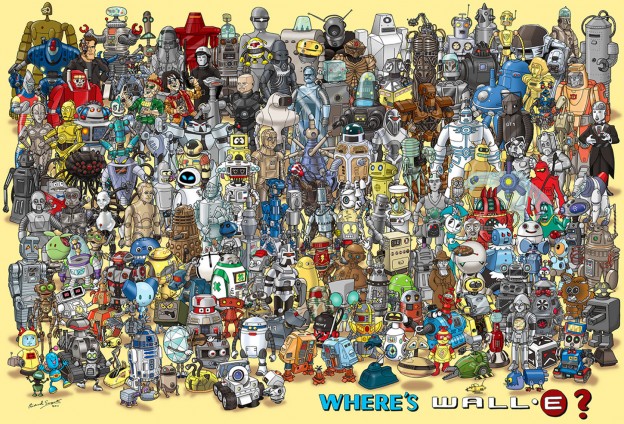
In the past I have praised the Annie Awards for providing a lens into the most important animated features from each year of the past couple decades. The largest mark against the awards came in 2008, when Kung-Fu Panda won Film of the Year against Wall-E, which was by far the most recognized and important animated movie of the year — and one of the most heralded of all time, for that matter.

My previous article alleges no clear culprit behind what was pretty objectively a poor selection. This year, it happened again: How to Train Your Dragon topped Toy Story 3. Now, I love HTTYD more than most, but Toy Story 3 is — by every important metric — the superior, more important film.

So what’s the story? It’s no coincidence the same studio released Kung-Fu Panda and HTTYD, and that studio didn’t have a film nominated in 2009 — the only year of the past three a non-Dreamworks film didn’t win. That’s right — Dreamworks used some sneaky tactics to win the awards.

Essentially, Jeffrey Katzenberg — chief overlord of Dreamworks and perhaps the most fascinating man in the history of animated film, though that’s a post for another day — saw a way to exploit the award selection system the Annie use. Basically, anyone who is a professional animator can buy a membership in ASIFA-Hollywood, the organization that votes for the Annie winners. (Fun trivia: ASIFA stands for Association Internationale du Film d’Animation, which is why everyone just calls them ASIFA.) Katzenberg pays for a membership for every one of his animators. Other studios do not; it’s up to the people who work there to decide whether or not to enroll.

So, surprise, the DreamWorks employees tend to vote for the films produced by the studio who employs them and pays for their membership. I don’t blame them. The limited oversight by the ASIFA has no real checks to prevent these types of shenanigans. Again, it’s not overt cheating — you can defend Katzenberg, in that he didn’t break any rules and didn’t (publicly) encourage DrewamWorks employees to vote as homers — but it also kind of is.

Pixar noticed this and decided to publicly boycott the Annie Awards. A cynic might argue that they chose this strategy simply because they have smaller numbers and can’t counter Katzenberg’s tactics. A Pixarphile would praise their devotion to integrity. I fall in the latter camp.

The result is that Annies have become something of a joke. It’s a shame; animation deserves a good awards platform. Buzz around the web sites I read is that the ASIFA is going to do something about it. Until then: we Pixar fanboys one more reason to mock DreamWorks (related)!

EDIT: Redemption?

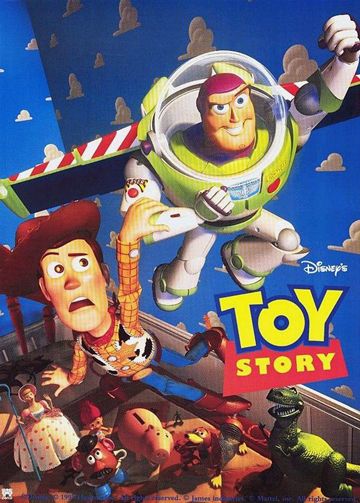
Toy Story (1995) Review – This town ain’t big enough for the two of us!

Over in that house is a kid who thinks you’re the greatest, and it’s not because you’re a space ranger, pal. It’s because you’re a toy. You are his toy! – Woody

Rating: 4 stars (out of 4)

The success of Toy Story was almost unprecedented: Critics made it the fourth best-reviewed film of all time. Viewers flocked to the theater; no film sold more tickets in the US in 1995. Its maker, a little-known rendering company called Pixar, catapulted to stardom. Disney earned its biggest hit ever not made by the Walt Disney Animation Studio.

Oh, and it was the first computer-animated feature, ever. A few films — including Disney’s own The Lion King and Beauty and the Beast — previously mixed in some computer-generated imagery (CGI) as special effects. Plenty of commercials and theatrical shorts had been created entirely with electrons, but never a full-length film.

(And yet, the success of Toy Story was still only “almost unprecedented.” Exactly one film innovated so profoundly and successfully before it: 1937′s Snow White and the Seven Dwarfs, the first hand-drawn animated film ever.)

Pixar’s strange history as a computer hardware and software company — documented in the engaging The Pixar Touch by David A. Price — suggests that Toy Story could easily have come out as little more than a technical exercise. With all of the effort involved in creating a 80-minute computer graphic, little details like plot, characters, and script could have been lost in the mix.

That’s what makes the most staggering success of Toy Story – its pure, giddy, rich, poignant storytelling — one of the great, unlikely Hollywood victories of all time. Simply, Toy Story is nearly a masterpiece, one of the best films of its decade, and one of the best animated films ever.

It all starts with the premise, which is simple on the surface but cuts deep. Toys come to life when their owners are away. They have their own little world, organized like a small community. They worry mostly about typical things: love, wellbeing, friendship, safety. Their deepest desire is to be played with by their owners. This undercurrent of longing — to be played with and valued — allows the Toy Story series to embody all sorts of existential metaphor.

There’s also a powerful contradiction contained in the premise: the toys can’t (or don’t — more on this later) move or express anything when humans are around, even though entertaining humans is their life calling. This paradox drives much of the film’s suspense and thematic depth.

Among the key triumphs for the film is its multi-dimensional characters. Most memorable are the odd couple at the heart of the film: Woody and Buzz Lightyear. Woody starts the film Andy’s favorite toy, a position that commands respect among his fellow toys. Fortunately, he’s a good leader and he organizes the toys into a productive community. As two stressful events — moving day and the dreaded birthday, when old toys are replaced with new gizmos — approach, Woody does his best to keep Andy’s toys calm and prepared for any disaster.

With Woody’s power and responsibility has come an inflated self-importance. He relishes in the role as favorite toy and leader. Admittedly, it’s an important role: Without him, it seems, there would be no order within the toys’ community and no hero for Andy’s elaborate, imagined adventures. The other members of the toy community mock Woody’s seriousness a bit, but seem to respect his authority.

Woody is voiced brilliantly by Tom Hanks, who infuses the protagonist with humanity and comedy. His inflection and energy turn some plain lines into classics, especially one of cinema’s great rants: “You are a toy! You aren’t the real Buzz Lightyear! You’re an action figure. Y0u are a child’s plaything!”

Equally memorable is Buzz Lightyear. Woody had spent the morning before the birthday party comforting his fellow toys that they wouldn’t be replaced, but Woody himself turns out to be the one in danger. Buzz Lightyear knocks Woody off the bed and off the top of the toy totem pole. All of the toys immediately embrace him as the new, cool toy and leader. Even Woody’s beloved Bo Peep admits that Buzz has “more gadgets on him than a Swiss Army knife.”

Yet Buzz has a self-delusion that surpasses Woody’s, and it’s this confusion that drives the film: He doesn’t realize that he’s a toy. He thinks he’s really a space captain. As Rober Ebert put it, “Buzz is the most endearing toy in the movie, because he’s not in on the joke.”

Throughout the first half of the movie, Buzz operates as if he’s temporarily crashed on an alien world and has to repair his cardboard box space ship. This leads to some of the funniest moments in the film, when Buzz makes off-handed observations in a militaristic, formal tone. “I don’t believe that man’s ever been to medical school,” he remarks when toy-abuser Sid plays the part of a toy surgeon.

Because of Buzz’s persistence to his world view, his transformation is quite poignant. His belief that he’s the Buzz Lightyear comes crashing down, quite literally. Woody is forced to make a change in his self-outlook by the end of the film, but it’s nothing compared to the complete identity crisis Buzz goes through.

Credit voice actor Tim Allen for capturing these complexities. Billy Crystal was initially desired for the role, but he turned down the role, so Allen was offered the gig. Crystal’s rejection was ultimately a fortuitous twist to the film. Allen’s everyman, blue collar take on Buzz allows the character to remain relatable. Crystal’s detached, high-pitched voice (later utilized to great effect in Monsters Inc.) could have pushed Buzz into an unlikeable character.

As brilliantly-conceived as Buzz and Woody are on their own, the real magic happens when the two are together, which is the better part of the movie. Both are completely confident of their place in the world, and so the first half of the movie is loaded with great scenes where each thinks the other is the craziest toy alive.

This comes to a head in the aforementioned scene at the gas station. Buzz tries to escape to get in touch with Star Command to defeat the Emperor Zerg, while Woody just wants to get back home in time for moving day. “You are a sad, strange little man, and you have my pity,” says Buzz. It’s a remark that seems woefully ironic at first, but grows more true the more you think about it: Woody had forgotten that his role as a toy was the be there for Andy, not fulfill his own self-image as a leader and hero.

After Buzz’s delusion collapses along with his self-meaning, Woody helps him infuse a new meaning. In one of the more brilliant scenes of the film, Woody and Buzz’s flawed world views intersect: Woody, to escape his plastic cage, has to admit that he’s not inherently “better” than Buzz or any other toy, even if he fancies himself important. Buzz, with the help of a Woody pep talk, sees that their is a certain value and duty in being a toy. His radio may be a sticker, but the “Andy” scrawled on his foot is truly a badge of honor and responsibility.

This turning point kicks the film into its third act, which finally sees Buzz and Woody working together in a radical shift from the first two acts. Fortunately, the two cooperating is nearly as entertaining the two clashing, particularly in the climax. My favorite moment of the movie is when the two re-use an earlier exchange in an entirely different light: “This isn’t flying, this falling… with style.”


While many of the aforementioned scenes rank among the movie’s many superior moments, I also want to commend the opening of the film. So much of what makes Toy Story great — the respect of imagination, the honoring of the sacred bond between child and toy, the thrilling use of CGI to create perspectives and worlds that move — are summarized in those first five minutes. Plus, there’s the music, the brilliant combination of score and original songs by Randy Newman, epitomized by “You’ve Got a Friend in Me.”

“You’ve Got a Friend in Me” has since become a standard. The simple, catchy tune works a basic expression of love as well as an embodiment of the core themes of the Toy Story series. Particularly seeing the later films’ use of the song, it’s hard not to marvel at how well the song captures so much at the heart of Pixar’s films.

Newman also contributes two other original songs to Toy Story, “Strange Things” and “I Will Go Sailing No More,” the former of which works better than the latter. Though I love the scene where Buzz learns the truth about his toyhood, the song adds an extra layer that was not necessary. The scene would have probably been more effective with a simple score.

Aside from that, the music in Toy Story is exceptional. Newman’s score resonated so strongly that he has been brought on for five more Pixar scores.  Toy Story 3 holds his best work, but Toy Story is no slouch, particularly during the climax.

Toy Story shines in the details as much as it does the sturdy framework of the story. The side characters — from the loyal Slinky Dog to Spud the maniacal hound to Hamm the gearhead — are all given distinct personalities and animated with an astonishing amount of humanity and personality. Rex the cowardly dinosaur sticks out as particularly funny, but it’s hard to crown anyone other than the little green aliens as the most memorable secondary characters of the film. I guess all space toys have trouble with their grips on reality (including Zerg from Toy Story 2).

There are so many inspired small touches of artistry — reflections on the glass of Buzz’s helmet, messages on the Spell ‘n’ Speak, throwaway one-liners, quick and creative establishing shots that would have been impossible in hand-drawn animation — that I’m willing to forgive the movie’s few flaws that come out after close watching, particularly on the technical side. It’s really incredible how little of the film suffers from technical issues (credit the brilliant direction of Lasseter and others for hiding most flaws) but it makes the few poorly-rendered animations of humans and dogs all the more glaring.

I also found the storyline of Sid’s toys a little bit less engaging than the rest of the story. While I enjoy the idea of a toy hell at Sid’s house, the interaction with his deformed toy experiments is nearly too on-the-nose for the rest of the story which maintained a subtle and understated thematic backbone. The “don’t judge a toy before you really know him” message is a bit excessive even if it plays nicely into the growth of Woody.

The semantics of the toy/human relationship are also a bit fudged here. This film seems to indicate that toys choose not to speak and interact with humans. After all, Woody does come alive (*) in front of a person for a brief second in Sid’s final scene. This seems at odds, though, with other basic properties of the human-toy world division as shown. The notion that toys can’t be seen “alive” by humans for metaphysical reasons, not by choice, seems to be the ultimate explanation in the other chapters of the trilogy and is one that seems to fit the logic of the world a bit better.

(*) Before he comes alive in front of Sid, Woody mentions that they’re going to have to “break a few rules.”

My last complaint is the closing scene of the film. I’ve never been a fan of movies that end on a punchline, and so the joke final line and shot end the affair on a down note compared to a film that’s otherwise so universally strong. It’s a flimsy complaint, but these are the types of nits you pick when a film is so close to perfect.


These complaints aren’t enough to tarnish in any meaningful way the giddy excellence of Toy Story. Sixteen years later, the original still packs a tremendous punch and tells a story worth experiencing again and again. It may not tackle big ideas as ambitiously as later Pixar films, including the later parts of the Toy Story series. But, scene-by-scene, it’s perhaps the strongest film the studio has produced. There’s not a minute in these 81 that fail to soar to infinity and beyond.

A few other thoughts:

  • One underrated element of Toy Story is the variety of faces that Woody makes. Had his faces failed to be effectively expressive, the film would have greatly suffered.
  • There’s a bit too much emphasis on Mr. Potato Head here: too many gags that involve his face falling apart and perhaps too much of his bitter skepticism.
  • Toy Story has a few silly, throwaway gags from characters or beats we never see again: The shark who steals Woody’s hat, Buzz’s experience as Mrs. Nesbitt, and a few others.

Disney’s Golden Age of Feature Animation, Part 2 (1950-1963): Walt’s last stand


vlcsnap-2010-07-10-14h24m55s108

This post is part of The Month of Animated Features. Read part one of Disney’s Golden Age historical overview here.

Following the 1942 release Bambi, the next several years were not a kind decade to Walt Disney’s animation studio. With a limited staff and limited funds, they produced only six “package films,” only one of which — the 1949 Adventures of Ichabod and Mr. Toad — showed any real promise.

With the studio on the verge of bankruptcy, they needed a surefire success or risked going out of business for good. So Disney turned to what had worked for him best in the past: A classic fairy tale with a beautiful princess. He hoped his new project, Cinderella, would strike gold the way Snow White had in 1937.

Cinderella used the largest budget of any animated film to that point — more than $3 million. It was an everything-or-nothing gamble for Disney, who had learned the hard way that pricey full-feature films weren’t a guaranteed source of income. He encouraged his animators to use some shortcuts to scrimp. For example, almost every scene involving human characters was filmed first with sample actors in cheap live action. Animators used this live film as a reference, which saved them significant amounts of time in the planning and drafting phases, with the side effect of detracting somewhat from the staff’s creative freedom following that filming.

[Edit: I have received numerous inquiries from friends and readers curious about this process and how it could possibly save money by adding in that middle step. I've been searching for a more detailed explanation in my animation books, but I've found little. Here's a Wikipedia article describing it.]

vlcsnap-2010-07-10-14h26m37s97

The one significant part of the movie not filmed beforehand were the scenes involving the animals, including the cat Lucifer, the friendly mice, and the assorted dogs and mice. As a result, the film ended with something of a clash between the naturalistic humans and zany animals.

Nonetheless, the film was a smash and an resoundingly satisfying movie, emotional and exciting. The writers really put Cinderella through the wringer, giving her aunt and stepsisters truly evil personalities. The movie also has a real sense of magic and romance, particularly in the first dance between Cinderella and the prince.

Disney wisely decided to retain full rights and responsibilities for the soundtrack, using his new record label to print the soundtrack. The self-produced soundtrack album made a tremendous profit for the company, as did the film in the box office.

vlcsnap-2010-07-10-14h38m37s126

Aesthetically, the film works but does not sparkle with Disney’s best, in part because the character animations are occasionally bland as a result of the live action-to-animation process. Still, it’s a great fairy tale (more compelling and classic than Snow White) and a memorable movie particularly highlighted by the lively animals.

While Walt Disney hoped Cinderella would be a beginning of his second reign as a beloved, influential animator, it would sadly be the last film whose final product bore large amounts of Walt’s own fingerprints. The studio’s next several projects featured intermittent work from Disney himself, but the man had become increasingly frustrated with animation. His later efforts were focused on live-action film and TV, and particularly on his new passion project, Disneyland.

vlcsnap-2010-07-10-14h27m02s109

Next on the animation studio’s slate was Alice in Wonderland, released in 1951. The film had an extremely rocky production and was long in the works, to the point that Disney himself pretty much abandoned the product. His decisions to deviate from the Lewis Carroll’s source material, to make the film all-animated instead of featuring live-action characters, and use frequent, short songs were all maintained.

The film is something of a mess, but an enjoyable one. It focuses on the whimsical verses of Carroll’s books. The voicework and animation are uniformly strong, but the plot is too episodic and surreal to be fully satisfying — even with the changes that brought the story back down to earth slightly.

vlcsnap-2010-07-10-14h26m58s66

Perhaps because of its colorful vibrancy, Alice received some surprising love from critics (purportedly, Walt expected backlash from fans of Carroll’s work), but failed to catch fire in the States. It’s one of the few films from the decade to not become a massive hit.

Disney the company has strongly supported the film in spite of its early disappointment. Alice was one of their first films released to home video, and it has featured prominently in parades and attractions at Disney theme parks.

Much like Fantasia, the company also eventually banked on the film’s popularity with drug-users during the psychedelic era. The film’s 1974 re-release, promoted with trippy posters, was such a massive success that the company only waited seven years to release it again.

vlcsnap-2010-07-10-14h27m24s214

While 1951′s Alice was only a middling success, 1953′s Peter Pan was a rousing one commercially. The highest grossing film of 1953, Pan also ranked among the more inspired animated features of the decade. The animation, overseen in part by Disney and in part by many of his most experienced animators, was vivid and imaginitive. Plus, the film featured much more of a coherent story than Alice.

Some of the philosophical quandaries of J.M. Barrie’s imaginative world allowed Peter Pan to resonate deeply with many viewers in ways that even 1950′s blockbuster Cinderella hadn’t. Unfortunately, a subplot of the film is extremely racist by today’s standards. The group’s encounter with the “Injuns” and ponderings of the “Red Man” are simply painful to watch, something that has tarnishes the enjoyability of an otherwise lovable tale with one of Disney’s great villains: Captain Hook.

As was the case of the other 1950′s Disney films, the production of Peter Pan was a long, drawn-out ordeal. Disney secured the rights to the film early, then the film sat in purgatory during World War 2, before finally being dragged out of the vaults and completed.

vlcsnap-2010-07-10-14h31m59s234

But Disney’s next film, Lady and the Tramp, had an even longer and more perilous development. Some reports have early work on the film beginning as early as 1937, the year Snow White came out. Yet Lady and the Tramp kept being shelved by the studio until the early ’50s, finally receiving a release in 1955.

vlcsnap-2010-07-10-14h30m41s235

Writers and fans remain divided on whether Lady and the Tramp deserves the title of “classic,” but surely its title romance is one of the strongest and most compelling among the studio’s works. The film has typically strong animation and a warmth to it (including the famed spaghetti scene) that evaded Peter Pan, Alice in Wonderland, and to a certain extent, even Cinderella. The film resonated strongly with audiences, surpassing the box office of every Disney animated feature except Snow White.

Walt Disney’s role in Lady in the Tramp was again much smaller than in the earlier films, and the studio would produce only three and a half more features under his tutelage: 1959′s Sleeping Beauty, 1961′s 101 Dalmations, 1963′s Sword in the Stone, and the early stages of 1967′s Jungle Book.

vlcsnap-2010-07-10-14h32m15s149

Sleeping Beauty was conceived, like Cinderella, as something of an heir to Snow White, but Disney’s increasingly short attention span with animated features caused the film’s creative vision to be dispersed primarily to the visual design department, a change that shows. The scenery and character animation of Beauty are of the first order, with stunning detail and colors.

But the story is the weakest of any of Disney’s full length features to that point. The film seems to get a free ride from Disney loyalists, perhaps for its purity and naivete (much like Snow White), but there’s no shying away from the lack of memorable characters, thematic undertone, or plot complexity. History has been kind to Sleeping Beauty, perhaps kinder than it should have been.

vlcsnap-2010-07-10-14h33m04s138

Audiences at the time were not entirely enthused by the project, as the film only narrowly made a profit. The unexpectedly poor results forced the studio to make large-scale layoffs. But in time, Sleeping Beauty eventually earned its keep, with seven re-releases bringing cash to Disney’s coffers from 1970 to as recently as 2008.

The penultimate film released in Walt’s lifetime was 101 Dalmations, a charming entry to the Disney canon. A newer, more efficient technique of transferring animation to film gave Dalmations a sharply defined look, with strong black lines outlining characters and pieces of the sets.

vlcsnap-2010-07-10-14h35m14s137

Many animated Disney films have been as defined more by their villains than their heroes, and 101 Dalmations is one example. The wonderfully named and animated Cruella de Vil at times resembles a demoness more than a fashion-obsessed plutocrat. She also receives one of the most memorable Disney numbers of the decade, a catchy ditty that paints her as a menace.

The film only debatably fits into the “Golden Era” of animation, as its new animation technique and style and its modern setting don’t particularly fit with any of Disney’s other works to that point. Still, 101 Dalmations retains a level of entertainment above any Disney animated film following it until at least  1977′s The Rescuers, if not 1988′s Roger Rabbit or 1989′s The Little Mermaid. It’s hard to completely discount Walt’s presence, as the studio would quickly reach a weary inconsistency following his death.

vlcsnap-2010-07-10-14h35m20s216

Last — and perhaps least — among full-length animated features in Disney’s lifetime was 1963′s The Sword in the Stone. The film was conceived and directed by animator Woolie Reitherman, who pitched the idea of adapting an Arthurian novel to Walt Disney in spite of reservations from his fellow animators. Disney OK’ed the idea — in part because he loved the Broadway show Camelot – and Reitherman put the vision to screen.

The end result felt more like a jazzy, modern-toned re-interpretation than a timeless adaptation. Though the film has some good songs and a few dazzling scenes and visual devices, the plot is too episodic and the characterization too weak.

Sword in the Stone was a mild success commercially and critically at the time of its release, but time has not been kind to this chapter in Disney’s animation. Leonard Maltin writes “The film is charming, and enjoyable, but it lacks the spark that set so many other Disney films out of the ordinary.”

Martin Goodman of The Animated Movie Guide mocks the central plot and character: “[Main character] Wart doesn’t need either brains or brawn. He is already the future king and has only to yank the sword from its resting place anyhow. Merlin should have told him five minutes into the film and then gone to Bermuda; we would all have been spared this silliness.”

Walt Disney’s death in 1966 seems a good moment to cap The Golden Age, as most film historians agree the period was cooling down by the late fifties and early sixties, both in the spheres of features and shorts. Though Disney’s role was greatly diminished in the above-average 1950′s films compared to the masterpieces of the late 1930′s and early war years, his presence and artistic sensibilities still reigned and even carried over to 1967′s Jungle Book, the last film that Walt had any direct input on.

Regardless of where you draw the closing line for Disney’s Golden Age, it’s clear in his quarter century of animated work,he produced a large slate of classics and even a few masterpieces worthy of repeated reviewings. His influence is still detectable in animation in countless ways, not the least of which is simply the ambition and amount of love poured into animated features the way he did from the format’s birth. To this day, animators and writers turn for inspiration to the likes of Pinocchio and Bambi, because attentive visual design and storytelling never die.

vlcsnap-2010-07-10-14h25m07s219


Snow White and the Seven Dwarfs (1937): The greatest or the outdated-est?

snow_white_and_the_seven_dwarfs

This post is part of The Month of Animated Features. While the Golden Age overview highlights the role of Snow White in the history of animation, this post takes a look at Snow White in terms of how creatively valuable it is as a film viewed today.

Film Focus: Snow White and the Seven Dwarfs, 1937

Most film fans would tell you that Snow White and the Seven Dwarves, published in 1937, was the first American animated film, but they’d be wrong. Lotte Reiniger created a one-of-a-kind, silent, silhouette-animated film called The Adventures of Prince Achmed in 1926 after joining a group of experimental filmmakers.

But Snow White was the first hand-drawn animated film, and the first one to leave a major impact on the public, so I’ll start there.

vlcsnap-2010-07-05-01h02m47s133

To most film buffs and animation fiends, Snow White and the Seven Dwarfs is pretty much immune to criticism. Widely regarded as the either the greatest animated film of all time or the runner-up to Pinocchio, Snow White ranks among the biggest commercial, critical, and influential successes of all films, let alone animated films.

That’s why I’m disappointed to have to say this: In many ways, Snow White is not a very good movie by today’s standards. The characters are, for the most part, simplistic and predictable. The plot is threadbare. In short, Snow White has a very slight story. It’s little more than extended comic sequences and songs strung together. This style of storytelling is well-executed but is not as satisfying as the narrative-driven films popular the past few decades.

Snow White herself is aptly named: She’s so perfectly naïve and proper that it almost passes as a retroactive parody. They won’t be showing this classic at any feminist rallies in the near future: Snow White eagerly cooks dinner, cleans the house, and wants for nothing but a strong man to take care of her.

The most interesting character is the evil queen. There’s something poignant about the fact that she makes herself hideous just to become the most beautiful in the land. Overcome by envy of youth and beauty, she forgets that she is quite beautiful herself. Her obsession is with being the most beautful, best looking woman in the land. She’s willing to take away all of her beauty just to try and bring down Snow White, too. The movie doesn’t really explore this obsession, which is a shame. It’s the darkest and most fascinating element of the plot.

vlcsnap-2010-07-05-01h06m06s76

The dwarfs are, by design, rudimentary characters defined by one trait. The only two who really show any complexity are Doc, the hesitant leader to the group in spite of his nervous stutter, and Grumpy. I suppose its just the cynicism of modern American film that I’m used to, but Grumpy’s hesitancy to give his goodwill to Snow White seems perhaps more reasonable than the other dwarfs’ automatic devotion.

Aside from these characters, no one in the movie has any subtleties or growth. There’s really not enough plot for any character development beyond the fairy tale basics. The worst offender is the prince who doesn’t earn his significance in the plot. I’d be shocked if he’s actually on screen more than a minute total.

But like nearly any classic film from before the 1970’s, if you view Snow White with a different expectations from what you’d have going into a modern movie, you can actually get a lot out of it.

vlcsnap-2010-07-05-01h22m26s87

Simply, Snow White ranks among the most visually beautiful films of all time: You’d have trouble finding a frame of its 80-some minutes not worthy of a screenshot. Every scene, every effect, and every character is obviously-hand designed by pros. No efforts were spared by the animators to make this an impressive debut for Disney.

The strongest scene is late in the film, alternating between the dwarfs frantically rushing back to their house and the painfully quiet exchanges between the disguised queen and snow white. It has a palpable tension to it, no matter how many times I see it.

Any critical plot analysis should be taken with a grain of salt, too, since this is one of the original fairy tales set to cinema. One could argue that the story is stronger because of its simplicity and purity, in that it evokes nostalgia by adhering the heroine to such innocence and plainness.

Finally, the film’s importance cannot be overstated. It immediately made feature-length animation both viable and culturally important. It kicked off the so-called Golden Age for Disney features, a stretch that wouldn’t be rivaled for a half-century.

Regardless of its lean story and characterization, Snow White is a must-see for any movie fan, and a must-own for any animation fiend.

vlcsnap-2010-07-05-01h07m19s88


Disney’s Golden Age of Feature Animation, part 1 (1937-1949) – Walt takes the throne, nearly loses it

vlcsnap-2010-07-06-16h13m13s199

This post is part of The Month of Animated Features

Though it’s hard to imagine it today, cartoons existed long before the television. In the late 1920s, feature length animation was nothing more than a radical experiment, but silent cartoon shorts were relatively common and shown in movie theaters. This infancy of American animation would shortly give way to one of the style’s most creative periods.

According to most film historians’ definition, the Golden Age of American Animation began with the inception of sound-synchronized cartoons in 1928. The first talking cartoon was a short by Walt Disney’s animation studio called Steamboat Willie. The star of the eight-minute film later became the ubiquitous symbol of a conglomerate: Mickey Mouse.

The short was a massive success, and from that point on, two things were clear: 1) the world wanted sound cartoons, which studios quickly noticed, and 2) Walt Disney, the brain behind Steamboat Willie, was animations’s biggest innovator.

In 1934, Disney decided to take another gamble: A feature-length animated film: Snow White and the Seven Dwarfs. Legend has it that studio executives and filmmakers around Hollywood called his project “Disney’s folly” during production. Certainly, most reasonable businesspeople would have looked at the film’s troublesome development and expected a creative mess and a commercial flop.

First, Disney’s budget ballooned from a quarter million to nearly eight times that, a mammoth budget for the time. Next, most animation and industry experts doubted that the market had any interest a ninety minute cartoon. The perfectionist Disney also required such high standards of his crew of animators – the biggest and most talented ever assembled at that point – that it was sometimes a serious strain on the workers.

There was also a (valid) concern that Disney and crew were making up what they were doing on the fly: The characters and story took many drastic shifts throughout writing and production. Much film produced was scrapped as inconsequential to the film, a huge waste of money and time that devastated several of the animators working.

There was also another, not-so-small problem: The technology at the time didn’t allow for what Disney wanted his staff to create. The team had to innovate again and again just to meet Disney’s high expectations, which didn’t allow for shortcuts or cop-outs.

vlcsnap-2010-07-06-16h15m29s142

But, when all was said and done, Disney looked the genius. The rest of the world – including his doubtful wife – became the foolish skeptic. The initial screening, the audience of which contained some of the most powerful people in the industry, was a rousing success that received a standing ovation.

Everyone from Time Magazine to The New York Times to the Academy Awards thanked Disney for expanding the boundaries of cinema. But the biggest thank you of all came from audiences: To this day, Snow White ranks in the top ten highest grossing films in US box office history, adjusted for inflation. The film’s adept balance of emotional, fairy-tale storytelling and raucous comedy is beloved to this day.

The greatest aesthetic legacy of Snow White is its intricate, hand-crafted visuals that have a timeless look to them. The backgrounds and scenery were often hand-painted with tremendous detail, even if they were on screen for only a few seconds. Animation buffs who care more about the technical, visual accomplishment than story still swear by Snow White as the greatest animated film of all time, a notion the AFI backed a few years ago.

vlcsnap-2010-07-06-16h20m26s49

From 1937 onwards, the most notable American feature-length productions of the Golden Age of American Animation came under the guidance of Walt Disney. Several of his next fifteen films have been treated well by history and are regarded as some of the crowning achievements in animation history.

After his enormous success with Snow White, Disney received a vote of confidence from his financial backers. With a blank check, he started work on Pinocchio. The production of his sophomore effort was just as turbulent as the development of Snow White, with many of the same hurdles – Disney’s perfection, unclear tone, re-writes in story, technical barriers – and some new ones. The most notable new distraction was the brewing conflict in Europe.

By the time the film was released in 1940, an increasingly distracted public shunned the final product despite critical acclaim, even from the few writers who didn’t adore Snow White. Part of the problem was Pinocchio’s darker, scarier tone and lack of underdog buzz that Disney’s first film received. By the end of its first theatrical run, Pinocchio had recouped barely half of its $2.3 million budget.

It’s a shame that Pinocchio didn’t catch the nation’s zeitgeist the way Snow White did; both in terms of storytelling and technical animation, it’s a major step forward. Had it proven another big moneymaker, Disney could have aimed even higher in ensuing years and had the backing to make it happen.

vlcsnap-2010-07-06-16h23m13s174

Meanwhile, Disney was working on another project, nearly as ambitious and groundbreaking as Snow White had been. Fantasia was initially conceived as a new series to be iterated annually, but after animation costs skyrocketed, it was reworked as a feature.

Jerry Beck’s Animated Movie Guide describes Fantasia (1940) as “an ambitious attempt to fuse classical music, animation, and state-of-the-art technology into what Walt Disney hoped would represent a new form of entertainment.” A collection of seven no-dialog stories interpreting popular classical pieces, Fantasia stretched the boundaries of animation even more than Pinocchio. Its development caused the innovation of several moviemaking and screening technologies, most notably multi-channel surround sound.

Today, Fantasia is a favorite among animation fiends due to its visually stunning sequences. It also has a reputation of being Disney’s film to most appeal to intellectual audiences, with its mythic proportions and use of classical music – something that is today considered high art. Despite this reputation, the original was conceived as a work for the masses, and each of the songs were quite popular and well-known at the time.

Unlike Snow White and Pinocchio, Fantasia received only mixed praise from critics at the time of its release. Many felt Disney had stretched animation too far; that his attempts to force a visual narrative onto songs hurt both the stories and the beauty of the music; and that the attempt to make abstract art accessible to the public diluted its effectiveness.

vlcsnap-2010-07-06-16h24m34s220

There are many fascinating historical tidbits surrounding Fantasia. Apart from its foresight into surround sound, perhaps the most compelling story about Fantasia is that it spiked in popularity during the late 1960s and early 1970s, right around the time American youth began experimenting with marijuana and LSD. Disney tacitly embraced the film’s cult success with drug-users, even using psychedelic advertising for Fantasia’s 1969 re-release.

Financially, the film was a complete disaster upon its initial 1940 release. Few theaters could even screen the movie in its full glory because of its sound system requirements. Fantasia just about ruined investors’ trust in Disney.

vlcsnap-2010-07-06-16h26m14s209

Short of cash and trust from investors, Disney needed to recoup some of his losses from Fantasia and Pinocchio. His next feature, Dumbo, was made on a shoestring budget compared to his earlier features. Conceived primarily as a cash-grab, Dumbo clocked in at a skimpy 64 minutes and was made for less than $800,000. Despite its lean storytelling – or perhaps because of it – Dumbo was a commercial success(*) upon its 1941 release and gave Disney a chance to make one more all-out creative effort: Bambi.

(*) Though it remains a popular cornerstone of Disney’s back-catalog, there has been some backlash against Dumbo due to some crow characters who resemble black stereotypes. It wasn’t the first or last instance of racial caricature by the studio: Fantasia had a scene with a slave centaur that has distinctly black features. Peter Pan devoted a song to wondering why the “Red Man,” also called the “Injun” in the film, has red skin. Even as late as the 1990s, in films like Aladdin and The Lion King, Disney was accused of using offensive racial caricatures.

Creatively, Dumbo was a significant accomplishment, too. Though it limits the intoxicating décor of his earlier films and his next film, it retains the emotional core that is a trademark of Disney’s best movies.

vlcsnap-2010-07-06-16h29m57s62

The book Bambi was based on - along with early versions of the film – painted a much darker and more violent film. Beck’s Guide relates a story of an early draft of film including a scene with a human corpse following a hunting accident. It so mortified early screening audiences that Disney reluctantly cut it from the film.

The multi-year arc of Bambi (1942) was a more ambitious story than either Pinocchio or Snow White, though the film ended up shorter than either. Bambi certainly ranks as one of the most luscious animated films ever released, and its low-dialog storytelling has aged nicely. It’s beautiful to look at, with an appropriately engaging story and many playful, memorable scenes.

The scene of Bambi’s mother’s death has gone down in history as one of the most traumatizing in any family film, though it’s a bit tame in comparison to the significantly more moving death of Mufasa that would startle audiences a half century later in The Lion King (1995).

vlcsnap-2010-07-06-16h57m41s113

Bambi, like Pinocchio and Fantasia, was a box office flop. It’s now seen as the last animated film during Walt Disney’s peak creative era, generally agreed to be the pre-war years through 1942. Constrained budgets, Walt Disney’s growing interest in live-action film and theme park design, and the reduced labor due to wartime efforts prevented later works receiving the level of detail that Disney’s first four features – Snow White, Pinocchio, Fantasia, Bambi – received.

Despite the decline in quality of Disney’s features, most animation historians do not consider Bambi the conclusion of the Golden Age. Other animators, such as Tex Avery, continued producing first-rate shorts, and even Disney’s lesser works from the 1950s have been treated kindly by audiences.

Nonetheless, Bambi was the end of a chapter for Disney’s animated features. His studio’s next six animated films were “package films,” or sets of two to ten smaller films – from 1942’s Saludos Amigos to 1949’s The Adventures of Ichabod and Mr. Toad – that were a financial necessity. Much of Disney’s staff had left the studio either to fight or to help the US make propaganda films. The remaining workers churned out mini-films as fast as possible. Creatively, they stand several rungs below the full-feature stories that preceded and followed them in the Disney oeuvre.

Read part 2, which covers Disney’s 1950 all-in gamble, and the final decade of Disney’s golden age

The Month of Animated Features (July 2010)

roger_ruff

As I revealed in my previous post, I’m focusing my efforts during July on learning and writing about animated films. I’ll probably start with some overview and history of animation, then shift into some features and analysis, and finish the month with a few culminating posts, with reviews mixed in.

You can use this post to find links to all of my posts about animated movies this month. I’ll update it as the month passes.

My past writing about animated features:

Toy Story 3 (2010): Introducing the new king of cinema trilogies

ts3

Rating: **** (out of 4)

Sorry, Shutter Island. Toy Story 3 is my favorite movie I’ve seen this year, and it’s not even close. I’m an unashamed Pixar fanboy, so you should probably take my reactions with a grain of salt. But here is my attempt to persuade you to see Pixar’s latest masterpiece, in bullet points:

  • The design and creativity of Toy Story 3 is just on a higher plane than any animated film from any other studio. Pixar remains committed to visual storytelling, not far removed from silent films. The level of detail is stunning.
  • The film’s ending is one of my favorites ever. After the third act twist, this film is on storytelling hyperdrive.
  • Rarely if ever have I seen a film so thematically rich. Different elements of Toy Story 3 work as metaphors for all types of big concepts and struggles: love, community, death, capitalism, aging, family, cloning, and — more than anything else — loss. (Also, it has weird parallels to the holocaust.)
  • Before last week, the king of blockbuster trilogies was either classic Star Wars or Indiana Jones as far as I was concerned. Others preferred the overwrought and overrated Lord of the Rings, and classic cinema enthusiasts sing the praises of the Man With No Name. But we have a new Best Trilogy Ever. Each of the films has a distinct flavor, yet the whole works greater than the sum of the parts because of its distinct thematic arc. Simply phenomenal.
  • The movie parodies and influences in this film are spectacular. Any film buff (especially prison escapes) will be in heaven here.
  • The older this series get — or maybe just the older I get — the better these movies get, and the darker they appear. This movie (intensely) contemplates a variety of toy deaths and afterlives.
  • Every character gets his or her moment. In the centerpiece adventure of the film, all eight or so of the central characters contribute in substantial ways.
  • The new villain (whose identity remains ambiguous until about the halfway point, so I will not reveal it here) is excellent, perhaps the best of the series.
  • Pixar nerds will be in Heaven — there are Easter Eggs galore.
  • Mr. Potato Head, usually content to be a smart-aleck with a couple of good sight gags, gets the funniest joke in the movie: one that ponders what the “essence” of a Potato Head is.
  • Three friends of mine who claimed to not like the second Toy Story admitted to loving the third one, to the point that they’re ready to revisit the second film and reevaluate. So if TS2 didn’t do as much for you as it did for me, don’t be scared to check TS3 out.
  • Trust me that there’s a satisfying, conclusive conclusion to this story arc that brings the series’ central conceit — toys that come to life and are loyal to their owner — full circle.
  • Everyone in the theater over the age of sixteen was on the verge of tears, if not bawling. (And I’m not ashamed to admit that I felt tears streaming down my cheeks.) This film is as much a love letter to nostalgia and childhood as it is an animated adventure.
  • Just see it. Even if you don’t end up as enamored with it as I did, it will surely evoke some response in you. 99% on RottenTomatoes and 96 on MetaCritic means almost nobody has disliked it — or even not loved it.
  • A telling quote from the IMDb boards: “Seriously. Did anyone else just feel like their childhood just ended right before their very eyes?”
  • Right now, the film is ranked #11 on the IMDb top 250, with a nontrivial chance to peak in the Top 10 or Top 5 (before inevitably dropping, as always happens on the IMDb list). My point is not that it’s one of the best movies ever, but that pretty much everyone adored it the way they adored movies like The Dark Knight and LotR3.
  • Lastly, and perhaps most importantly, the closing credits includes a Spanish version of You Got a Friend in Me by the Gipsy Kings. So unspeakably awesome.

Pixar Retrospective – Ten films into redefining animation

Pixar_animation_studios_logo

pixar-screens

[out of four stars]

Toy Story (1995) – 4 stars
A Bug’s Life (1998) – 3.5 stars
Toy Story 2 (1999) – 4 stars
Monsters, Inc. (2001) – 4 stars
Finding Nemo (2003) – 4 stars
The Incredibles (2004) – 4 stars
Cars (2006) – 2.5 stars
Ratatouille (2007) – 4 stars
WALL•E
(2008)4 stars
Up (2009) – 4 stars

Many, many thoughts on the first decade and a half of my favorite film studio of all time, after the jump.

[Read more...]