Tag Archives: episode recap

The Wonder Years S03E15 – The Tree House

After a couple of episodes of The Wonder Years at its worst, the show rebounds with an excellent outing. The Tree House works for a few reasons. One is that it focuses on Dan Lauria (third time this season!), who is maybe the show’s most reliable presence (aww, who am I kidding, Josh Saviano is my favorite). Another is that the episode tackles a topic the show hasn’t visited in awhile — sex – and tells a unique story with it that really builds off of well-established characters. A third reason the episode works is that it’s very funny.

We start the episode with Doug Porter traumatized after receiving the talk from his dad (“I actually had to listen to my dad say ‘genitals’” — hilariously repeated at the end of the episode). Sexual awareness is slowly rising around school; that little imp Hobson in particular thinks he has it all figured out. (It’s all about the magazines as far as he concerned — women as curiosities to be admired.)

Meanwhile, Jack has off from work and Norma, tired of his fidgety presence, tasks him to undertake one of Kevin’s childhood dreams of building a treehouse. This leads to one of the best moments of the episode, when Future Kevin, Kevin, and Jack all skeptically retort “A treehouse?”

But Kevin and Jack agree to begin building the treehouse, except it’s Jack who does most of the building. At least until Kevin speaks up and shows he can hold his own with a power-saw. Then, to Kevin’s delight, he manages to enter into his dad’s sacred bubble. Jack’s handiwork seems to be one of the few places he can really be himself, so when Kevin enters that world, he briefly connects with Jack as an equal.

And then… tomatoes lady. The moment when Jack and Kevin spot tomatoes lady for the first time is one of the best unspoken scenes of the series yet. Jack’s amusement and guilty pleasure clash with Kevin’s utter horror at the “tomatoes” below.

Jack and Kevin become acutely aware that maybe they’d been acting as if Kevin was a little bit more grown up than he was. It’s actually the opposite dilemma as the one in The Powers That Be; there, Jack’s emasculation pushed him to treat Kevin like an irresponsible baby. Here, their bond over building the tree house allowed him to treat Kevin like a grown man.

While the The Powers That Be ended with Jack making a conscious decision to treat Kevin a bit differently, The Tree House doesn’t give Jack the chance; his temporary bond of equals between he and Kevin crashes and burns due to the awkward disconnect in sexuality between a man who’s had three children and a boy who hasn’t even had “the talk” with his own dad.

The episode is only halfway done at that point, but the new stasis is quickly set: The two are equally aware of the terribly uncomfortable situation in front of them, and they silently agree steer clear of that danger zone of awkwardness. They try to avoid it for as long as they can, but ultimately that barrier keeps rising.

The best line of the episode is”Look at the size of those tomatoes, Jack!” when, once and for all, Kevin and Jack are faced with the uncomfortable truth that Kevin will soon be growing up — not just in the sense that he can use a power tool, but he’ll have a sex life. It’s an amusing moment, compounded with other amusing moments (like when Norma gets the wrong idea about exactly why Kevin and Jack enjoy staying up in the tree working on the treehosue), but the biggest success of the episode is its exploration of the tenuous father-son relationship that uncontrollably steers into uncomfortable territory.

In all, a very decent episode to bounce back from a pair of the weakest the show had done.

Other thoughts:

  • No mention of the fact that Kevin’s dating Winnie now? Or are they even dating?
  • I’m a big fan of both Doug Porter and Hobson. Glad to see them both used to good effect here.This show is not particularly innuendo heavy. I think the “tomatoes” line is about as severe as the innuendo has gotten.
  • This is  great soundtrack episode. My favorite music moment of the episode was “Papa’s Got a Brand New Bag.”

The Wonder Years S03E14 – St. Valentine’s Day Massacre

There are two points of discussion following St. Valentine’s Day Massacre. First is the outcome of the episode and what it means for the show; I’ll get to that at the end of the recap. Second is the quality of the episode itself, to which I say: Meh. Color me disappointed.

I’ve described a few episodes of this show as “farcical” and “plot-heavy.” These descriptors fit this episode more than they ever have before, so let me take a moment to discuss exactly what I mean.

When I say an episode is “farcical,” I mean that it contains a lot of the traits of the theater genre of farce: mistaken identities, miscommunication, improbable coincidences, and otherwise unlikely scenarios. It’s not an inherently negative descriptor; a good farce can be extremely entertaining. But episodes that are too farcical have to be very funny and clever, because zany antics tend to overshadow things like “character stakes” and “motivation” and other aspects of good dramatic storytelling.

Consider St Valentine’s Day Massacre — one of the major subplots of the episode arose from a simple mistake of left or right. When the seventh grader put the note in the wrong locker, the locker ended up to be Becky Slater’s, and she of course misinterpreted it, etc. — that’s a potentially funny plot, but it has to be funny, or it doesn’t work. And, here, it’s not very funny.

And when I call an episode “plot-heavy,” I mean that characters’ motivations and intentions change rapidly through the episode. Over She, My Best Friend, and I and St. Valentine’s Day Massacre, Winnie’s favor of Kevin changes maybe a dozen times for different reasons — she’s jealous he’s trying to hook her up with Paul, then she resents Kevin for it and goes on a few dates with Paul, then her feelings for Kevin overcome her spite so she dumps Paul… etc.

These kind of rapid attitude changes can be very funny, particularly in a romantic context. But they can also be tiring; it’s just not as effective to have big changes in relationships over too short a timespan. For whatever reason, the writers of the show have tended to pair plot-heavy episodes back to back, as they do here, when they’d be a lot more effective evenly spaced.

Again, I don’t hate episodes that tend towards farce and rapid romantic plot changes. Steady As She Goes from the second season follows that formula and is one of my favorite episodes of the series. But Steady As She Goes does a few important things correctly that St. Valentine’s Day Massacre.

First, Steady As She Goes is very well grounded in believable character motivation even though it’s full of farcical hijinks. St. Valentine’s Day Massacre isn’t particularly grounded — we know Kevin wants Winnie, but a lot of the episode deals with his Becky Slater trouble, which really has very little to do with his desire for Winnie (except to complicate it even further).

Winnie is even more all over the place. I had trouble figuring out exactly why she was mad at Kevin at any point during the episode; at the end, she could have been mad that he kissed Becky, but instead she said that he’d embarrassed her. So I was even more confused.

Worst of all was the bit where she said she lied when she said she liked him, but later admitted that she had lied about lying. There’s nothing clever or character-based in that. It’s just a crappy excuse to keep the characters apart for another ten minutes.

Just Between Me And You… from the second season of the show was similarly exhausting in its copious miscommunications and deceptions. But that episode managed to redeem itself a little bit with an ending that the implied that the point of the episode was to show just how pointless all of that drama is.

St. Valentine’s Day Massacre had a hint of thematic purpose behind it. A few times throughout the episode, Future-Kevin made some remarks about how adolescent romance is made more difficult because so few people are direct, decisive, and honest. The resolution of the episode backs the theme up: Simply, Kevin tells Winnie how she feels, asks her if she feels the same. They apologize and start holding hands.

It could have been redemptive — the writers revealing the thematic point they were trying to make all along — but it mostly came across as empty and frustrating. Kevin and Winnie finally getting together is a MASSIVE plot point, one that I’d expect to be taken seriously and built up to. But this episode had the opposite effect: it bored me with romance and crushes. The moment where Kevin and Winnie get together felt like the non-punchline to an anti-joke.

There was one thing I really appreciated about the episode: the callbacks to plot arcs from previous episodes. Kevin’s crush on Miss White (or whatever he name is now) played a pivotal role in one scene, while Becky Slater was obviously a central figure of the plot. But the use of Becky in particular frustrated me and made me wish they hadn’t brought her up at all. What made her so appealing at the beginning was how the writers treated her as a character with emotions and motivations rather than just a plot device to keep Kevin and Winnie apart for awhile longer.

In short, St. Valentine’s Day Massacre frustrated me as an unfunny, unsatisfying episode that put concluded with the climactic moment of Winnie and Kevin apparently getting together. There are a few more parts of the episode that didn’t work for me — including Paul’s apparently nonexistent memory that he got dumped by Winnie for Kevin — but I think I’ve made my point.

So now, a few thoughts on what a Kevin-Winnie romance might mean for the show. First, I think the writers picked a good point in the series to finally hook the two up. They’d run out of excuses to feasibly keep them apart and explored plenty of courtship stories. I’m ready to see some actual relationship stories.

My biggest concern is that the writers will bail to quickly on the relationship for any number of reasons (the show is on Moonlighting Fallacy watch). I’ve tricked myself into watching this show as if it were currently airing, but I do have the advance knowledge that show runs for six seasons; if it breaks Winnie and Kevin up too early, I might start to dread the inevitable will-they-won’t-they cycle knowing I have to put up with it for another eighty or so episodes.

On the more optimistic side, I’m really excited to see what The Wonder Years has to say about all phases of a romatnic relationship during formative years. A first serious relationship is one of the most meaningful, educational experiences of anyone’s life. There’s a lot of poignant material for the show to deal with. And I won’t even mind an occasional silly, farce episode, as long as they don’t have lasting consequences and manage to actually be funny.

I just really, really hope the writers take their time telling these stories. If they handle this correctly, it could add a powerful dimension to the show. If they botch it, it could seriously hamper the show for seasons to come by wasting a central conflict carefully constructed over two and a half seasons of great television. No pressure or anything, though.

The Wonder Years S03E13 – She, My Friend, and I

She, My Friend, and I started out pretty excellently, but became steadily less enjoyable as the half hour wore on. It is only the first half of a two-parter (as indicated by the “To be continued”), but, as a standalone, I walked away from She, My Friend, and I feeling… what’s the technical term… icky.

As a general rule, it takes some finesse for viewers to seriously consider shifting sides in a romance. That is — the entire series to date has paved the way for Kevin and Winnie to be together, so it’s hard for viewers to take seriously the idea of Paul being with Winnie. It could have worked if it was a sham the whole time, but the fact that Paul seriously invested himself in the relationship (Winnie, probably less so), made it very jarring and uncomfortable to sit through.

In real life, a situation like this might happen. In a sitcom, where we have the lens of one central character, it really shouldn’t unless the writers are going to flat-out commit to it as a serious character arc. These kinds of serious, potentially dynamic-altering  are a lot like fire. Handled properly, the flame can be pretty impressive, but it’s more likely that the someone’s going to get burned.

Notice the way they show Paul and Winnie together — it’s always for brief snippets, it’s always from far away, and it’s never intimate. This shows to me that the writers could never really invest in the idea themselves, or at least they knew it might put off viewers. It just feels wrong, and everyone knows it.

It’s a shame that most of the episode focused on a conflict that really did not work, because the beginning of the episode was so promising. Kevin’s denial of his feelings for Winnie have been hinted at, but I was ready for an episode to seriously reconsider their status after the very effective conclusion to Don’t You Know Anything About Women? The opening scene here provides a nice set-up for such a plot.

Paul also had an excellent opening to the episode. His post-breakup blues are very funny and very well-played by Josh Saviano. My favorite bit was when he said he couldn’t go watch a movie with Kevin because he and Carla always used to go watch movies together. I could easily watch a whole episode of Saviano playing hilariously miserable.

But then Kevin — and the episode — decided to play with fire. It could have been a really funny affair, Kevin setting up a pretty clearly not-interested Winnie with a desperate Paul. Instead they tried to play the plot semi-seriously, and it felt like a ham-fisted attempt at drama.

Even the resolution was unsatisfying; I suppose Kevin was so excited when he gleaned from Paul that Winnie may in fact be interested in him (the episode never confirms this is what Winnie actually said, but I assume that it’s true). But what on earth was he thinking when he a) immediately approached Winnie, and b) told her that Paul said what he said? How could he have possibly thought that was the right thing to do?

The only answer that I can come up with is that the writers wanted to wedge another conflict between Winnie and Kevin. I could buy everything that kept them apart before, but if the show places an artificial barrier between them based on this episode, I’ll be disappointed.

I was hoping that She, My Friend, and I would end up a humor-driven affair. Instead, it focused on an uncomfortable romantic plot and ended with an unsatisfying cliffhanger. There were some nice moments on the fringes of the episode, but my discomfort with the core of the episode detracted from them.

The Wonder Years S03E12 – The Powers That Be

We lucked out — two Dan Lauria showcases in one season. The Powers That Be gives one of the show’s best actors another chance to show off his impressive chops when his own dad comes to town. Grampa Arnold, played by David Huddleston, throws a wrench in the Arnold family dynamic when he’s around; suddenly, Jack is no longer the patriarch of the household.

Specifically, Gramps gives Kevin his own puppy — without the approval of Jack. Thus, Jack finds himself against the idea of a puppy; even if he might have approved a dog entering the Arnold family on its own, he certainly wasn’t going to approve it with Gramps going over his head.

Kevin thinks of owning a dog as a treat, but Jack sees it as a boatload of responsibility: Kevin will have to train it, take care of it, feed it, spend time with it. In other words, he’ll have to become a parent of his own. Gramps treats owning a puppy as a present for Kevin to love and spoil — much like the way he treats Kevin himself. Jack is all too eager to remind him that there’s another side of the coin.

But the dynamic grows an extra layer of complexity because Gramps was in the role that Jack was in not long before. You can see some similarity in their personalities; both are difficult to impress, both are quietly stubborn and hard; and both have a fondness for The Honeymooners. Jack secretly wants his father’s approval, though he’d never admit it. And Gramps is hesitant to give his approval, much like Jack was to Norma in Pottery Will Get You Nowhere. But instead of pottery, it’s a family and a household Jack is showing off.

The disagreements build to a climax in a dinner argument. Gramps makes a statement about the potatoes — they’d give him gas because of the pepper — and it escalates from there. Jack is sure that Gramps is being intentionally hard to impress, as if to roll his eyes at everything that Jack has accomplished. But this specific instance may be one where Gramps truly has medical concerns; in general, he seems eager to focus his resentment at Jack, not the rest of the Arnold family, so it’s hard to say why he’d criticize Norma’s cooking.

Regardless, Jack and Gramps come to verbal blows. Both of them want to convince the other that they’re right, and neither is willing to listen to what Kevin has to say. Kevin’s rejection of the puppy has less to do with the puppy itself and more to do with a feeling that he’s just a pawn in their debates. He also knows he’s an important player in a similar dynamic only a few years removed — if responsibility for someone or something else means that he’ll descend into this inferno of resentment, he’ll have nothing to do with it.

In the end, Jack insists that Kevin keep the puppy. He wants to plant the seed in Kevin that paternity is more than that abomination of broken pride and disapproval that he’s witnessed the past few days. That’s not what being a dad’s about. The puppy both gives the chance to Kevin to start down the road of taking care of others and serves as physical promise that the three will act in a more reasonable, healthy manner.

The Powers That Be is a little bit of a tough nut to crack, thematically. There are lots of contradictions and complexities in the cyclical grandfather-father-son dynamic, so it’s hard to figure out who is in the right at which points. But that’s part of the point. The episode works well because it gives a chance for Lauria, Fred Savage, and David Huddleston to show off together.

It’s not a masterpiece, but The Powers That Be enriches the father-son dynamic of the show and once again puts Dan Lauria as Jack front and center, something I’ll never complain about.

Some other thoughts:

  • That Gramps calls Jack “John” is a nice touch.
  • I wonder how often we’ll see Buster in the future.
  • Very nice final shot of the mailboxes in a line, with the Arnolds’ broken from Gramps hitting it.
  • There are too many great little scenes between some combination of Savage, Biddlecomb, and Huddleston that I couldn’t list them all here. But one that stands out is the scene where Kevin wants to show off Buster as Jack and Gramps work on the window frame.
  • Jack’s Gleason impression is good but probably not legend-worthy. Still, it gave Gramps one of his darkest moments of the episode where he held back his praise for his son.

The Wonder Years S03E11 – Don’t You Know Anything About Women?

Damn it, Wonder Years! How could you do that to me? You pulled the fleece over my eyes and hit me in the gut at the last possible moment.

I loved that ending. Loved loved loved it. I had wondered why Winnie was absent and had never been brought up as a potential date for Kevin. I assumed the show simply wanted to tell a different story from the previous school-dance episode (Dance With Me).

Turns out I was both right and wrong: On the one hand, by using two characters who have no history with Kevin, the episode could dissect some broad points about romance and relationships without worrying about how their histories with Kevin would affect the discussion. On the other, the writers were simply distracting us for that one final reveal of Winnie wandering the dance floor, she and Kevin missing each other by mere moments.

And what a reveal it was: Future Kevin’s concludes his narration about how we all hope that “somewhere, somehow there’s someone perfect who might be searching for us,” the Righteous Brothers reach the emotional climax of “Unchained Melody,” and — BAM! — Winnie Cooper. Freaking brilliant.

I’m trying to remember exactly when I realized that the episode was leading us towards the Winnie reveal. It must have been at some point during that final narration. Everything — Kevin’s words and the music and the shots back and forth between Kevin and the crowd of dancers — was building towards something significant. It finally hit me that the show was using its big guns to remind us about Winnie Cooper. Even the lyrics were perfect: “Time goes by so slowly / And time can do so much / Are you still mine / I need your love”.

Anyways, there was also an entire episode leading up to those final moments, and I thought it was a pretty good episode. I was occasionally worried the episode would spin out of control into an one of those uncomfortable farce episodes where Kevin makes one bad decision after another. Instead, the episode was primarily focused on analyzing different types of romance: There’s the “comfortable” friend who has nothing wrong with him/her, but lacks spark and attraction. Then there’s the “dream” who ignites you but who has nothing substantial for you to connect with.

The episode points out the flaws of both types of romance. You can connect with the comfortable friend, but you can’t build a romantic chemistry. But the dream boy or girl, even if you can develop some chemistry with them, can never provide a satisfying relationship.

I must admit that I was rooting for Kevin to hit it off with Linda Sloan. Not only do Fred Savage and Maia Brewton as Linda have excellent chemistry from the outset, but Linda provides a fresh type of character for the show: A girl who is down-to-earth and undramatic and gets along great with guys, particularly Kevin.

Kevin has spent so much of this show pursuing drama queens and the complicated Winnie Cooper and girls with strings otherwise attached. Here was a chance at a girl he already had a good rapport with, who surprised him with how good of a date she could be, and who was clearly into him. “Don’t do it!” I said aloud as Kevin agreed to dance with Susan, who is no different from a half dozen other romantic interests Kevin has encountered so far.

But even as Kevin let his vanilla pudding slip away, the ending suggests that the perfect romantic match is someone who is equal parts comfortable friend and dream boy/girl: Or, in Kevin’s case, Winnie Cooper. The hard part is finding that person at the right place and right time. Kevin and Winnie miss each other by moments, just as it’s so easy for anyone to miss out on someone special because of bad timing or bad luck.

A few other thoughts:

  • The Wonder Years has a way with ending episodes strongly, but I have to say that this episode takes the cake for my favorite ending yet.
  • I spent so much of the recap talking about romance and Winnie that I failed to mention Paul. This was as funny an episode for Paul as we’ve had in awhile. His rant about mini-golfing was so good. It’s hard not to be happy for him when he lights up after Carla calls him back at the dance. Josh Saviano, always the man.
  • But seriously, Kevin, why let Linda go? Yeah, I want Kevin and Winnie to eventually end up together, but why not give dating Linda a chance? She’s such a sweetheart and an enjoyable presence on the show. (The correct answer is that it’d probably end up just like Becky Slater, with Kevin eventually breaking up with her after remembering Winnie is the one he really wants.)
  • The icing on the cake is another appearance by Ben Stein, who apparently teaches chemistry along with natural disasters. The parallel between romantic chemistry and scientific chemistry is a pretty obvious one, but it worked well here.
  • I can only think of a handful of television episode endings that hit me with as much impact as this one. I’ll have to watch it again after I have the whole series for context, but Don’t You Know Anything About Women? definitely has potential as a pantheon entry in my TV episode endings hall of fame.

The Wonder Years S03E10 – Rock ‘n’ Roll

There are comedy episodes like The Pimple — which strain to milk comedy out of narrow topic — and then episodes like Rock ‘n’ Roll, which take advantage of having such a broad topic to focus on. The writers are firing on all cylinders during Rock ‘n’ Roll, which is aptly named because it takes a stab at all of the defining elements of rock ‘n’ roll music and ends up not only a funny, riveting 22 minutes of television but a compelling portrait of everything that makes rock music important and great.

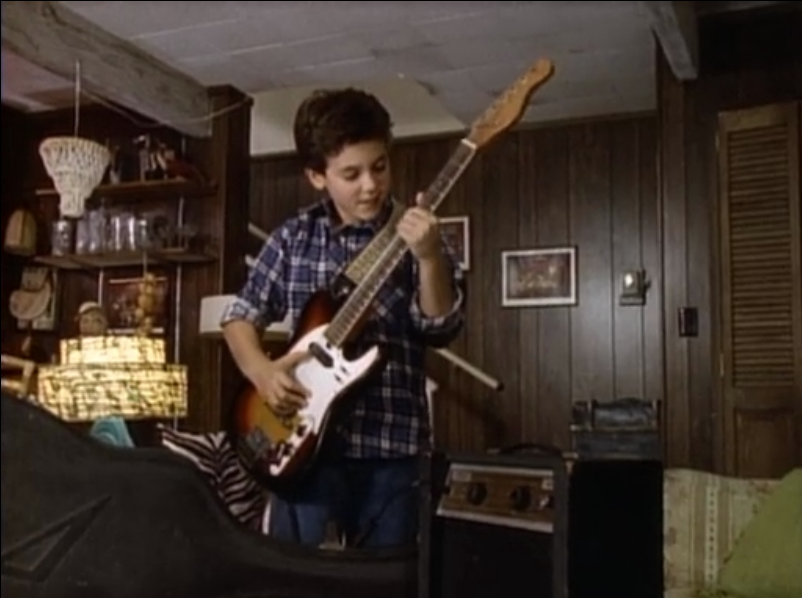
There isn’t much to the plot: Kevin earns the favor of a new student transferred from San Francisco who offers to teach him a few chords, and before long the two have started a band. The band gets a gig even though it isn’t quite ready for a show. Kevin quits out of fear of embarrassment, but rejoins the band at the last minute. Just as the show is about to start, they get shut down by the neighbors who complain to the cops.

But within that basic structure of a plot, the writers explore a huge variety of topics for comedy — awful band names, groupies, silly outfits, the awfulness of most local bands — and insight into the components that make rock and roll tick — rebellion, fun, getting lost in the music, desire for easy fame and fortune, resistance from the previous generation.

I could go back through the episode and find my favorite moments, but there were so many that it’d actually be a difficult task. (Though I have to say that Paul’s reaction to the name “Electric Shoes” was particularly memorable.) The episode was pretty well paced from beginning to end, with strong writing all around.

I really enjoyed Joshua John Miller as lisping rocker Larry Beaman; he gave off the vibe of someone who wouldn’t be cool for long, but as the new kid with the Frisco zeitgeist managed to come across as cooler than he actually was. It worked well for the episode, giving him a lot of personality in just one episode. I hope we get to see more of him later in the series.

And anything that references The Beatles’ performance of “I Want to Hold Your Hand” on Ed Sullivan is going to earn some points in my book. I’m glad the writers took the time to call out some of the most important rockers — The Beatles, Hendrix, the Stones, Clapton, The Who, and more — along the way. This show makes such unique use of a classic pop and rock soundtrack that this episode was fertile ground for a memorable music episode. And it delivered, particularly in the choice of My Generation as the Kevin bought his guitar.

I’m a sucker for rock and roll music (then again, aren’t most people?) so this episode was a particular joy for me. It’s not a masterpiece of storytelling or character, but it’s a pleasure from front to back and goes on my short list of favorite episodes.

The Wonder Years S03E09 – Math Class Squared

I really enjoyed Math Class, the first episode centered around Mr. Collins’ algebra class, and I enjoyed Math Class Squared, its sequel, even more.

The first half of this episode puts Kevin in a believable, morally complex conflict: Should he rat out the his cheating classmates? It’s a tough question that has been answered a lot of different ways throughout the history of coming-of-age TV shows.

Kevin decides not to, but ultimately gets seduced to cheat himself after he sees how easy it is. Credit the great exposition at the beginning of the episode to set up Kevin’s respectable status quo of being an average student, as well as Math Class’s impressive work at tying Kevin’s success in math to his pride, that it really hurts watching Kevin submit to the pressure of cheating.

Maybe the most compelling part of the episode is watching Kevin’s conscience battle the growing rewards of cheating — gerat grades, praise from his parents, respect from his peers, even attention from Winnie Cooper. But he knows he doesn’t deserve it, and, as the beginning of the episode established, takes a lot of pride in how much effort he puts into getting his C’s.

The whole bit about Kevin being temporarily switched into the advanced math class didn’t work as well as the rest of the episode — in a way, he actually got punished a lot less by being singled out because he didn’t flunk his unit test; plus, what did it really achieve? Kevin already knew he’s not a natural at math, so it’s hard to say he learned anything — but the rest of the episode worked strongly enough that it didn’t really bother me.

Just as the original Math Class, Math Class Squared was grounded by Steven Gilborn’s excellent work as Kevin’s algebra teacher. Gilborn continues to nail the math teacher vibe (seriously, when I see him, I see an exact hybrid of two professors I had in college). No-nonsense, passionless, intelligent, perceptive, and detached, Mr. Collins makes for a very understated character that contrasts to some of the hilarious extremes of the other teachers on this show.

The fantasy sequences peppered throughout the episode, particularly the show-stopper towards the end of the episode of everyone talking about numbers morphing into The Twilight Zone, only added to the episode.

The strong conflict at the core of the episode, along with the great work by Gilborn and Fred Savage, make this episode a delight and a step up from most of the past few episodes.

A few other thoughts:

  • Coach Cutlip’s speech about doing what you need to win and the dodgeball scene provided a nice metaphor for the cheating, even if they just served to remind me of the far better dodge ball scene in the Freaks and Geeks pilot.
  • It struck me as a moment of slight meta-comedy when Mr. Collins commented on Kevin’s expressive facial expressions, which often underscore the narration and go unnoticed by the rest of the world.

The Wonder Years S03E08 – The Pimple

The pimple story is probably the default coming-of-age story (assuming you exclude boyfriend-girlfriend troubles). I can’t count how many times I’ve seen some iteration of this story.

In many ways, it’s also the most idiotic, because teens on TV and in the movies almost never have acne unless it’s the focus of a plot. It’s actually comedic to me when TV characters flip out over a single zit. But The Wonder Years took it one step further: It made the zit nearly invisible. Seriously, look at that minor bump. It could pass as a mole. I couldn’t buy that anyone would single him out and taunt him for such a harmless pimple.

If you can swallow that level of absurdity, then this episode proved amusing enough. A bunch of scenes made me laugh out loud, other people’s reactions moreso than Kevin’s increasing desperation. Winnie’s line about how much it must have hurt getting hit right in the pimple and Paul’s “icckk” come to mind. (I watched the latter about ten times, and laughed at every one of them.) I also dug Tony Barbella as the bully who speaks about himself in the third person.

And then there’s Ben Stein, who is always the funniest part of the episodes he’s in. His dry presentation of horribly dark, apocalyptic material always works, no matter how many times the show uses it.

It was pretty clear from the start that Gina was going to have acne of her own, but I actually would have appreciated the episode spending more time in its denouement, recognizing that pimples happen to everyone and that he and Gina got along just fine in spite of it, at the expense of some of Kevin’s desperation at being seen, which grew pretty tired by the end.

I really liked the opening of the episode and I appreciated the horror movie comparisons. I’m always impressed when the show can manage to tie together a bunch of parallels, but it didn’t prevent The Pimple from being a shallow and predictable if amusing affair. This far in the run, The Wonder Years has been exemplary more often when it’s focusing on its dramatic elements than its comedic elements. Still, the show has had some truly great lighter outings, which makes it more disappointing when they feel routine.

The Wonder Years S03E07 – The Family Car

Although these changes have come
With your chrome heart riding in the sun
Long may you run

-Neil Young

The Family Car would not have been nearly as successful if the setting of The Wonder Years didn’t line up with The Greatest Generation fading out and the dawn of Generation X. But because it does, the Arnolds’ old wagon becomes a symbol for the traditional family values and even Jack himself. The show has established pretty well by this point that Jack takes a lot of pride in keeping the old wagon alive, and it’s pretty poignant (and sad) to see him slowly come to grips with the fact that there’s less of a role for the work habits and traditional values he was raised with.

But the episode actually elevates the car beyond a mere allegorical symbol. Jack has poured his money and his time into keeping it running smoothly. There’s been hiccups, particularly as it comes of age, but Jack’s always kept it rumbling on. In other words, it’s a lot like the Arnold family itself; the episode really made me feel his hurt when people, even his own wife and kids, couldn’t understand why he didn’t want to sell it short.

I found myself really affected by Dan Lauria’s performance this episode as maybe my favorite performance in a single episode yet this series. He alternately looks strong and lost in a world that’s move past the one he lives in. No actor on this show says more with facial expressions and subtle body language than Lauria.

Meanwhile, we have Patrick Cronin playing Marvin Lutz, the polar opposite of Jack, who embodies everything slimy and seductive about consumerism and image. His 1969 Mustang (one of the greatest cars of all time, by the way) immediately wins over the family and even earns the eye of Jack, at least until he learns that he’d have to sell out his old wagon for dirt.

On the school front, Kevin gets bombarded by taunts from the wonderfully despicable Craig Hobson (whom I described as “that little yit” in a previous recap before we learned his name), who provides a great foil for Kevin, Paul, and Winnie. Hobson strikes out with a girl and is, in general, a little spoiled brat, but he always seems to trump what Kevin has to say with a taunt about Kevin riding around in an old bucket of bolts. It’s hard to envision middle school culture caring so much about what cars people ride in, but it fits with the symbolism the car takes on in the episode.

The Family Car’s most excellent scene is the conversation between Jack and Norma about moving on and accepting that the car is dying, the times are changing. Lauria and Alley Mills are routinely fantastic, but are as good as they’ve ever been here.

There are lots of other good scenes here, though. Other favorites of mine are the confrontation at the dinner table, when Karen finally calls a cheapskate (which goes to show you that Karen may not have embraced her anti-bourgeois attitude as much as she’d like you to believe)

Very, very good episode. The Family Car is a reminder of how great Dan Lauria is for this show and how much depth and emotion this show can wring out images and conflicts as simple as a dying car and the decision to buy a new one.

A few other thoughts:

  • Those closing shots of the old wagon being quietly towed away as the family and neighborhood fawn over the new car were weirdly moving
  • This week’s edition of Wow, Awesome Editing: the montage of Jack negotiating with potential buyers of the old car, cutting back and forth between Jack and a new buyer each time.
  • Great shot by Kevin, nailing that glob of potatoes on Hobson’s shirt.
  • It’s taken awhile, but Danica McKellar and Fred Savage are finally starting to develop some serious chemistry. I’m looking forward to the next episode that takes on the Kevin-Winnie relationship.
  • This was a spectacular episode for music. We have the awesome use of “I Can See Clearly Now” and that perfect, closing use of Neil Young’s “Long May You Run” (quoted at the start of this recap).

The Wonder Years S03E06 – Odd Man Out

Odd Man Out makes a few crucial mistakes: For one, it never really gives a good reason for Kevin to break off his friendship with Paul. Second, it never adequately shows us Paul’s perspective. Lastly, it paints Kevin to be a pretty big asshole the entire time. Those three flaws prevented an episode with a compelling premise and a handful of nice moments from ever gelling into a good episode.

Let’s look at each one of these issues. First the “break-up” between Paul and Kevin. I understand the feeling that you just get tired spending time with someone. But the way these characters separate wasn’t particularly convincing. Kevin is impatient and Paul is a bit neurotic, but there’s no reason Kevin should have snapped. This made every event that followed feel a little bit pointless.

Next, the episode could have worked a lot better if it had given us a chance to see what Paul was thinking during all of this. In Loosiers and other episodes, we’ve had Kevin detail some of the reasons he and Paul became such close friends, but we rarely see what Paul gets out of the friendship. We got a snippet through Winnie, but that’s about it. Even at the end when the two confronted each other briefly on their bikes after both were the “odd men out,” and the show had a chance to give us Paul’s side of the story, it didn’t. (The Wonder Years has had some really effective “unspoken bond” type moments, but I didn’t think this was one of them.)

Lastly, Kevin being a dick. Paul tells Winnie that Kevin’s changed, and it’s hard to disagree with him. Kevin says some mildly hurtful things (did “four-eyes” ever count as an insult?) and proceeds to latch onto the perfectly decent Doug Porter. I consulted IMDb, and it says Doug had appeared in three episodes prior to this one, but his only appearance that I remember was one of my favorite scenes from one of my favorite episodes to date, Coda, where he played blocker to Kevin’s imaginary Joe Namath.

Except Kevin never really attempts to become friends with Doug, who he admits from the beginning he takes no joy spending extended time with. Instead, he milks Doug for his delicious food, nice mom, and cool model airplane — which he proceeds to crash into a tree. Then, Kevin won’t even rescue it himself; he makes Doug do it, who breaks his arm in the process. And then, when Doug tells Kevin that he thinks they’re best friends and asks him to help carry his books, Kevin shoots him down and tells him to “carry your own stupid books.”

It’s little surprise at that point that Doug realizes it’s not worth the effort to try and reach out to Kevin, so he hits it off instead with (the awesomely named) Brady Ryland, Paul’s rebound.

There were some nice touches — Paul and Kevin hanging out during a tent in a sleepover had a contrived feel to it, but it’s nice to see these characters we love just hanging out together every now and then. I also heartily enjoyed Brandon Crane as the congenial Doug. I hope we get to see some more of him. And Future Kevin’s words about how meaningful a best friend can be were pretty moving.

Still, Odd Man Out left me a little bit disappointed that the writers couldn’t do something more with a compelling concept for an episode.

Some other thoughts:

  • We knew from the start that Kevin and Paul would end up best friends again, not just because that fits the formula for this type of episode, but because Kevin confirmed they stayed best friends for decades to come. We’ve already seen flash-forwards of the two being best friends as adults.
  • Minor annoyance: The claim that Doug, Kevin, and Paul had played three games of Monopoly in one sitting. Yeah right.
  • Anybody have any idea if the trades Kevin proposed to Paul that sparked their rift were good trade offers?
  • Another nice moment: Kevin giving Doug the card that he wanted.
  • Another episode with Winnie appearing in some role other than romantic interest! Glad to see it!